
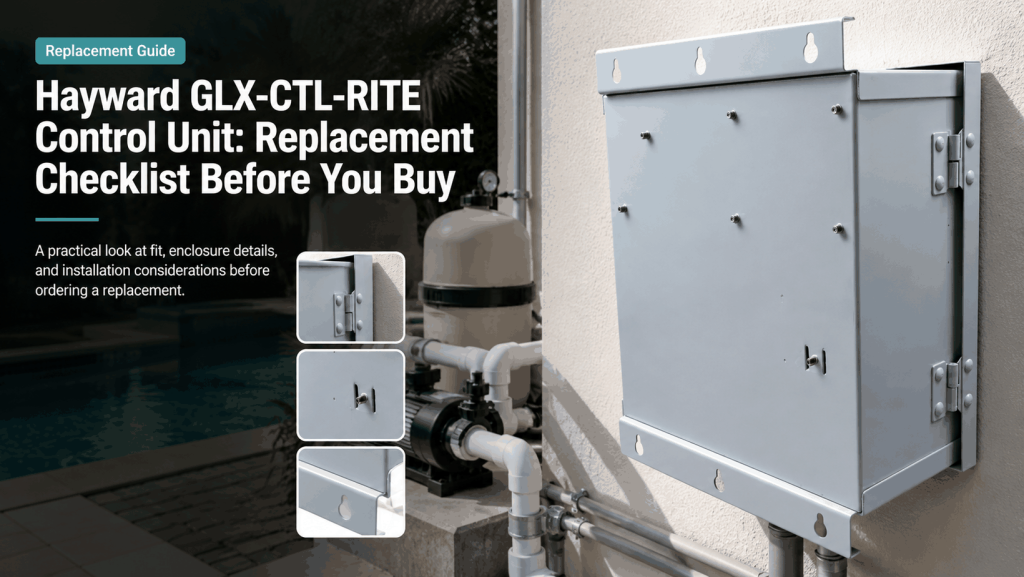
The Hayward GLX-CTL-RITE Control Unit is a major AquaRite replacement component, and buying it to solve an unconfirmed display or chlorination problem can be expensive. The controller, display board, main PCB, transformer, rectifiers, flow switch, cell, and wiring all participate in system operation. Begin with external evidence: photograph the control label and display, record LEDs […]
Tag Archives: Chlorinator Maintenance
19
Aug
Aug
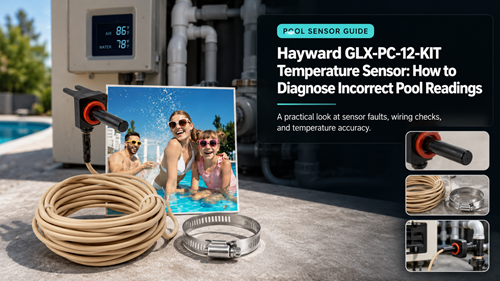
The Hayward GLX-PC-12-KIT Temperature Sensor is a 10K thermistor-style replacement used in compatible Hayward pool-control applications. When the displayed water temperature is wrong, the sensor is an obvious suspect, but cable damage, poor mounting, moisture at a connection, the wrong input, or a controller problem can produce similar symptoms. Start with a safe comparison test. […]
17
Aug
Aug
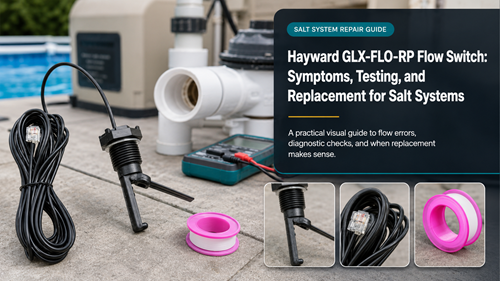
The Hayward GLX-FLO-RP Flow Switch is a safety input that tells a compatible salt system whether adequate water flow is present. When the controller reports no flow, the switch may be faulty, but it is only one part of the flow path and should not be the first component replaced automatically. Start outside the control […]
Salt Water System
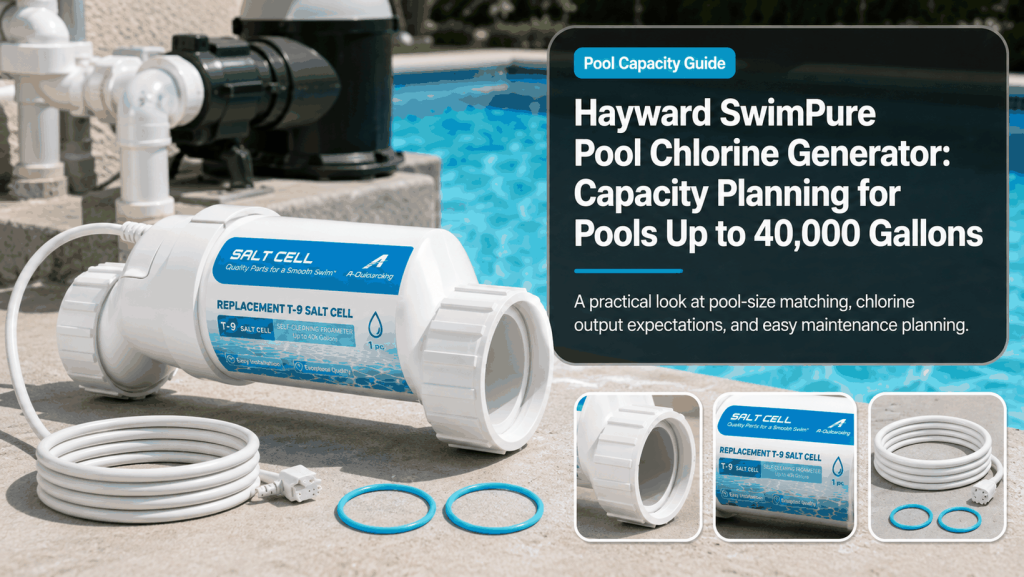
Hayward SwimPure Pool Chlorine Generator: Capacity Planning for Pools Up to 40,000 Gallons
14
Aug
Aug
The Hayward SwimPure Pool Chlorine Generator is most useful to understand as a system: controller, flow protection, cell, circulation schedule, and water chemistry all determine whether a large pool stays sanitized. A 40,000-gallon rating is a capacity ceiling, while real production demand changes across the season. Large inground pools can create high chlorine demand because […]
Salt Water System
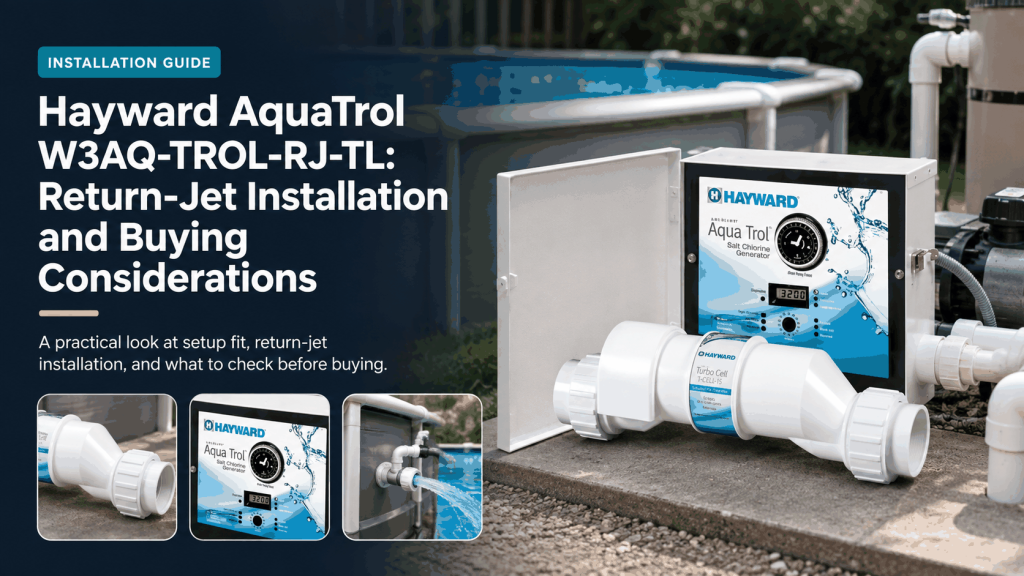
Hayward AquaTrol W3AQ-TROL-RJ-TL: Return-Jet Installation and Buying Considerations
12
Aug
Aug
The Hayward AquaTrol W3AQ-TROL-RJ-TL differs from the hose-pipe HP version at the point where the chlorination system meets the pool. The RJ setup is built around a return-jet fitting, so existing wall-return geometry and accessible equipment location become primary buying checks. A return-jet system can keep the equipment layout compact, but it should not be […]
Salt Water System
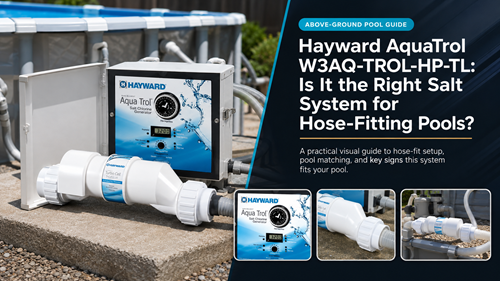
Hayward AquaTrol W3AQ-TROL-HP-TL: Is It the Right Salt System for Hose-Fitting Pools?
10
Aug
Aug
The Hayward AquaTrol W3AQ-TROL-HP-TL is a complete above-ground salt-chlorination system, so the buying decision is broader than choosing a replacement cell. The HP designation points owners toward a hose-fitting installation, while the TL configuration adds a twist-lock power connection arrangement that must match the planned electrical setup. For a new installation, verify pool gallons, hose […]
20
Jul
Jul
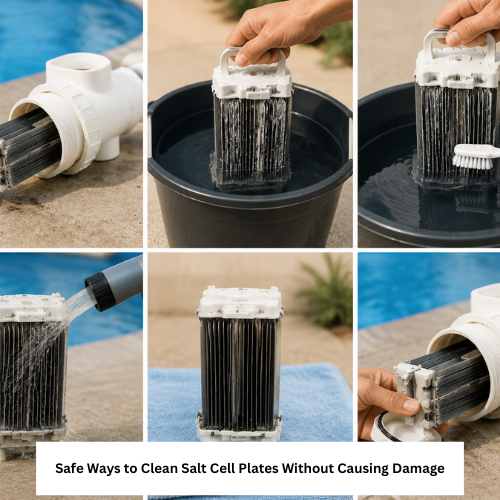
Before you clean salt cell plates, shut down the circulation system, disconnect power as instructed, and confirm the cell model and cleaning procedure in the manufacturer manual. Cleaning too often or using the wrong tool can shorten cell life, damage coatings, or create a chemical safety risk. Salt cell cleaning should begin with inspection rather […]