
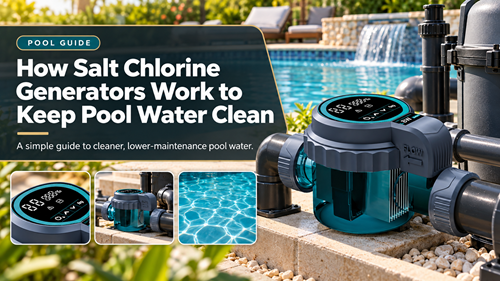

Salt water pool maintenance protects both water quality and the chlorine generator. The cell can automate chlorine production, but it still depends on adequate flow, correct salt concentration, clean plates, balanced water, suitable pump runtime, and routine free-chlorine testing. Ignoring those basics can force the system to run harder while the pool becomes less predictable.
The most useful routine separates frequent water checks from periodic equipment inspection. That makes it easier to catch rising pH, low sanitizer, scale, blocked flow, salt loss, or a dirty filter before one small issue turns into a no-chlorine warning or unnecessary cell replacement.
Salt Water Pool Maintenance Starts with Water Testing
A generator display can report operating status, estimated salt, or output percentage, but those numbers do not tell you the actual sanitizer residual in every part of the pool. A reliable test kit confirms whether chlorine production is keeping up with sunlight, temperature, swimmer load, and organic debris.
A consistent salt pool care routine also tracks pH because salt pools can trend upward over time. High pH reduces chlorine effectiveness and can contribute to scale formation on surfaces and cell plates.
Salt concentration changes mainly when water leaves the pool through splash-out, draining, leaks, or backwashing. Test before adding salt rather than responding to a single controller reading without confirmation.
Protect the Cell and Chlorinator from Avoidable Stress
Inspect Before Cleaning
Good chlorine generator cleaning begins with visual inspection. If the plates are clean, unnecessary acid washing can shorten cell life. Follow the current manufacturer procedure and use the least aggressive approved method.
Build a Repeatable Routine
A pool maintenance routine should include the pump basket, filter pressure, flow indication, salt reading, cell status, chlorine result, and pH. Recording those values makes gradual changes easier to see.
Keep Scale Pressure Under Control
Consistent salt cell care means managing the water conditions that create deposits, not only removing deposits after they appear. Calcium hardness, pH, alkalinity, temperature, and concentration effects all influence scale risk.
Balance Water for Sanitation and Equipment
For pool water balance, CDC emphasizes routine chlorine and pH testing. Manufacturer manuals may add product-specific salt, hardness, stabilizer, and saturation guidance that should be followed for the installed generator.
Use Observations, Not Just Alarms
Practical swimming pool tips include checking water level, pump runtime, recent rainfall, backwashing, and measured salinity before correcting a low-salt message. A sudden reading change can indicate water loss or a sensor issue rather than ordinary salt consumption.
Weekly and Monthly Maintenance Plan
| Frequency | Check | Why It Matters |
|---|---|---|
| Several times per week | Free chlorine and pH during active season | Confirms sanitation and guides output changes |
| Weekly | Water level, pump basket, filter condition and visible pool cleanliness | Protects circulation and reduces chlorine demand |
| Weekly to monthly | Salt level with an independent method as appropriate | Prevents unnecessary salt additions and low-salt operation |
| Monthly or when performance changes | Cell inspection | Finds scale before output is affected |
| Seasonally | Plumbing unions, flow switch, controller and electrical area | Finds leaks, corrosion or damaged components |
| After heavy use or storms | Chlorine, pH and debris load | Demand can change quickly after unusual events |
Use a Maintenance Sequence That Makes Troubleshooting Easier
Order of Checks When Chlorine Is Low
- Test free chlorine and pH
- Confirm pump operation and adequate flow
- Check generator output setting
- Verify salt with an independent test when needed
- Inspect filter and baskets
- Review stabilizer and recent weather or swimmer load
- Inspect the cell for scale
- Check warnings, sensors and compatibility before replacing parts
When the generator shows no output, avoid jumping directly to acid cleaning or cell replacement. A structured no chlorine output guide helps separate water-demand problems from flow, salt, temperature, scaling, and equipment faults.
Maintenance Habits That Can Shorten Cell Life
Frequent unnecessary acid cleaning, operating outside the recommended salt range, ignoring poor flow, allowing severe scale buildup, and running at maximum output without investigating persistent low chlorine can all increase stress or hide the real cause of a problem. Follow the exact manual for the installed model rather than a generic cleaning recipe.
Pentair’s current salt chlorine generator manual describes output cycling, salt requirements, and operating conditions for its IntelliChlor family. Other brands have different limits, so always use the manual that matches the controller and cell on the equipment pad.
Keep the Pool Stable So the Generator Can Work Efficiently
Salt water pool maintenance is most effective when small corrections are made before water chemistry or equipment performance drifts far from normal. Stable sanitizer, sensible pH, reliable flow, accurate salt readings, and a clean cell reduce the temptation to solve every issue by increasing output.
A generator that is correctly sized and maintained should be adjusted to the pool’s measured demand, not left permanently at maximum. That approach makes changes easier to diagnose and supports better long-term performance from the cell and controller.
Frequently Asked Questions
How often should a salt cell be cleaned?
Inspect it periodically and clean only when scale is present or the manufacturer directs it. Unnecessary acid cleaning can reduce cell life.
Why does pH matter in a saltwater pool?
pH affects sanitizer effectiveness, swimmer comfort, scaling tendency, and equipment condition.
Does salt disappear when chlorine is generated?
The salt-chlorine cycle reuses chloride. Salt is mainly lost when pool water leaves through splash-out, draining, leaks, or backwashing.
Should the generator run at 100 percent all season?
Not necessarily. Output should be adjusted to measured chlorine demand and pump runtime. Constant maximum output may indicate undersizing or another water-care issue.
What should I check first when chlorine is low?
Test the water, confirm circulation, review output and runtime, verify salt, inspect the filter and cell, and consider weather and swimmer load before replacing equipment.
