
Practical Guidance Around “Read More” What Does “Read More” Mean in Digital Content? The phrase “read more” is most often seen as a clickable label that expands hidden text, redirects to a full article, or reveals additional details on a page. It acts as a visual cue, telling visitors that what they’re seeing is only […]
Blog
Salt Water System
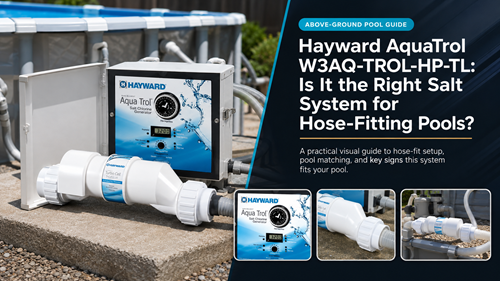
Hayward W3AQ-TROL-HP-TL AquaTrol Salt Chlorination System: Hose-Pipe Setup Tips for Above-Ground Pools
07
Sep
Sep
The Hayward W3AQ-TROL-HP-TL AquaTrol Salt Chlorination System is built for above-ground pools that use hose or pipe connections and a twist-lock electrical configuration. That makes it more convenient than adapting an in-ground system, but the correct hose size, return plumbing, flow direction, receptacle, and seasonal setup still need to be planned before installation. The HP-TL […]
Salt Water System
Hayward W3AQR15 AquaRite Salt Chlorination System: How to Size It for a 40,000-Gallon In-Ground Pool

01
Sep
Sep
The Hayward W3AQR15 AquaRite Salt Chlorination System is designed around the 40,000-gallon AquaRite class, but good sizing starts with the pool you actually operate rather than the largest number printed on a product page. Surface area, sun exposure, water temperature, swimmer load, stabilizer, pump runtime, and seasonal demand all influence how hard a salt chlorine […]
28
Aug
Aug
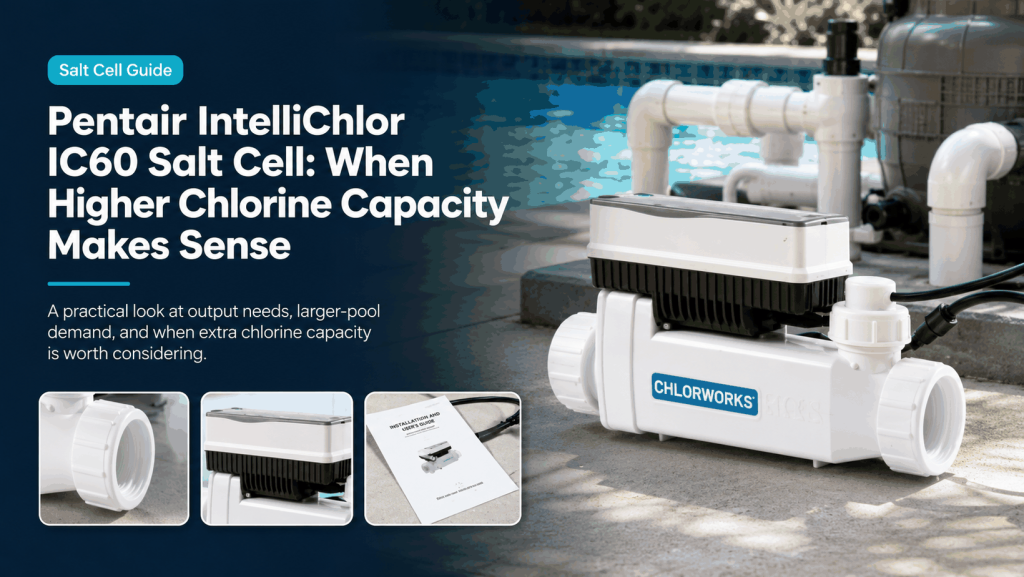
The Pentair IntelliChlor IC60 Salt Cell is the high-capacity option in the IC20/IC40/IC60 family. It is relevant not only to pools near 60,000 gallons, but also to compatible installations where an owner wants more production headroom for long swim seasons, intense sun, heavy bather load, or water features. Oversizing should still be deliberate. A larger […]
Salt Cell Replacement
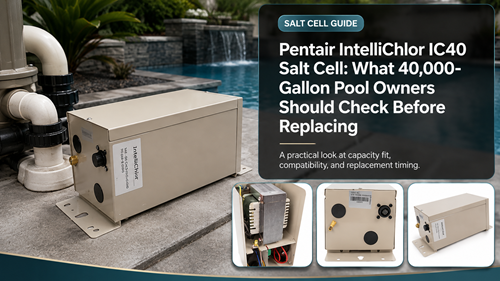
Pentair IntelliChlor IC40 Salt Cell: What 40,000-Gallon Pool Owners Should Check Before Replacing
26
Aug
Aug
The Pentair IntelliChlor IC40 Salt Cell is a common choice for medium-to-large inground pools because it offers substantially more output than the IC20 while fitting the same IntelliChlor family. Pentair identifies the IC40 as the up-to-40,000-gallon model, with actual daily production determined by runtime and output setting. A 40,000-gallon owner should avoid treating the cell […]
24
Aug
Aug
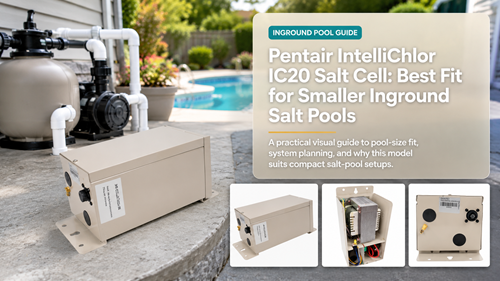
The Pentair IntelliChlor IC20 Salt Cell is designed for smaller inground salt pools that do not need the output capacity of the IC40 or IC60. Pentair identifies the IC20 as the up-to-20,000-gallon model, but owners should treat that number as a maximum capacity reference, not a promise that every 20,000-gallon pool will operate comfortably at […]
21
Aug
Aug
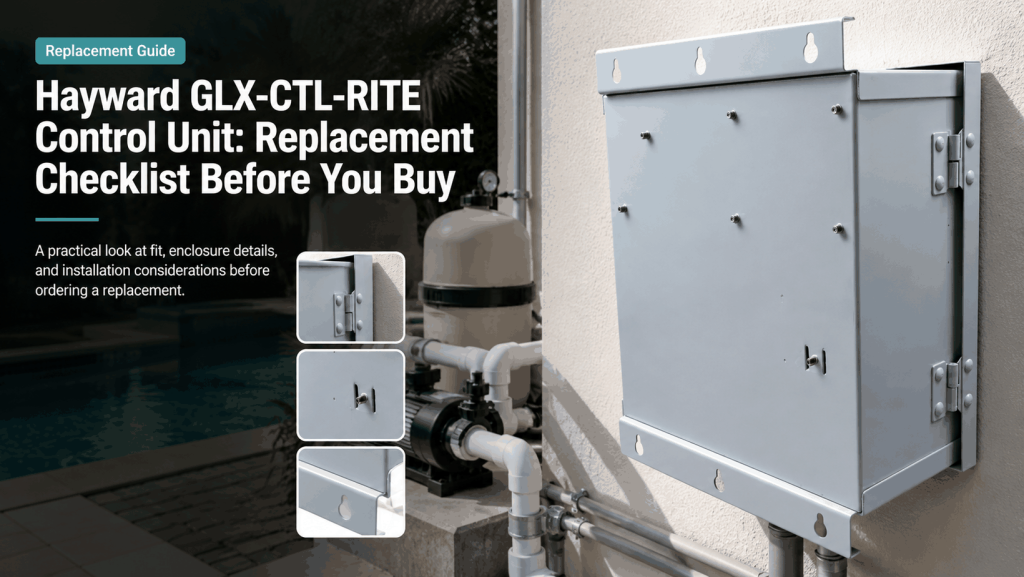
The Hayward GLX-CTL-RITE Control Unit is a major AquaRite replacement component, and buying it to solve an unconfirmed display or chlorination problem can be expensive. The controller, display board, main PCB, transformer, rectifiers, flow switch, cell, and wiring all participate in system operation. Begin with external evidence: photograph the control label and display, record LEDs […]
19
Aug
Aug
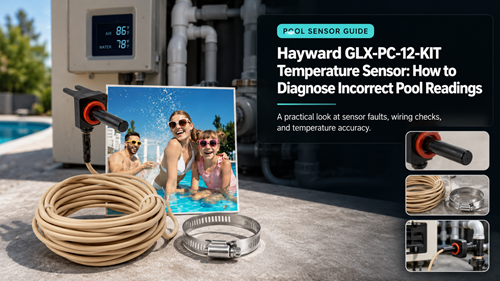
The Hayward GLX-PC-12-KIT Temperature Sensor is a 10K thermistor-style replacement used in compatible Hayward pool-control applications. When the displayed water temperature is wrong, the sensor is an obvious suspect, but cable damage, poor mounting, moisture at a connection, the wrong input, or a controller problem can produce similar symptoms. Start with a safe comparison test. […]
17
Aug
Aug
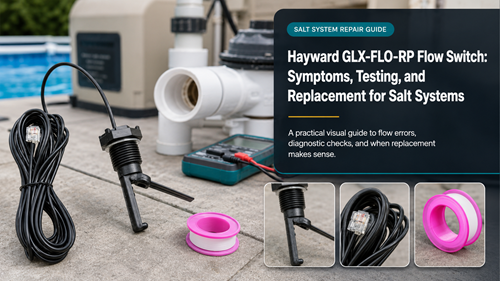
The Hayward GLX-FLO-RP Flow Switch is a safety input that tells a compatible salt system whether adequate water flow is present. When the controller reports no flow, the switch may be faulty, but it is only one part of the flow path and should not be the first component replaced automatically. Start outside the control […]
Salt Water System
Hayward SwimPure Pool Chlorine Generator: Capacity Planning for Pools Up to 40,000 Gallons
14
Aug
Aug
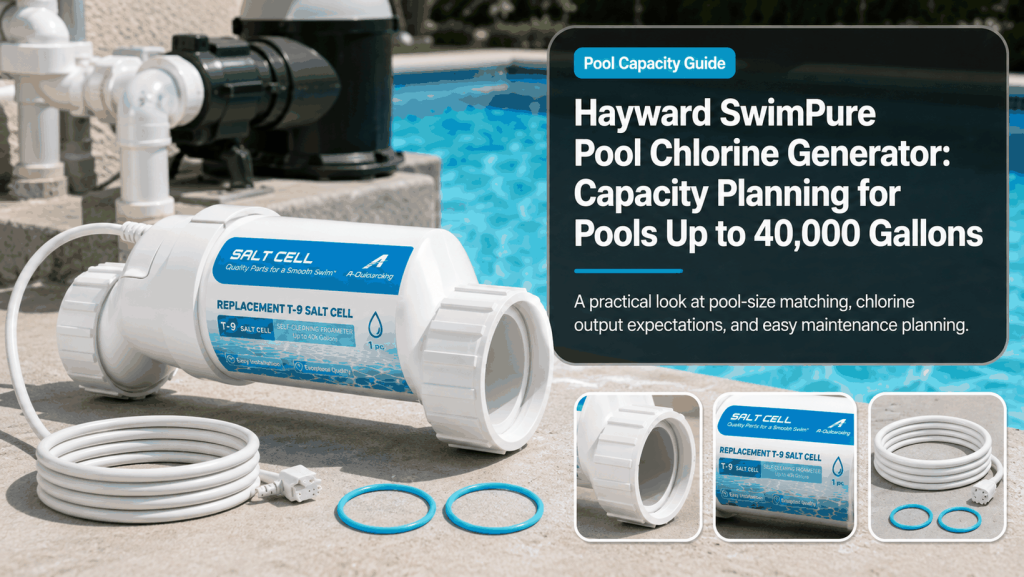
The Hayward SwimPure Pool Chlorine Generator is most useful to understand as a system: controller, flow protection, cell, circulation schedule, and water chemistry all determine whether a large pool stays sanitized. A 40,000-gallon rating is a capacity ceiling, while real production demand changes across the season. Large inground pools can create high chlorine demand because […]