
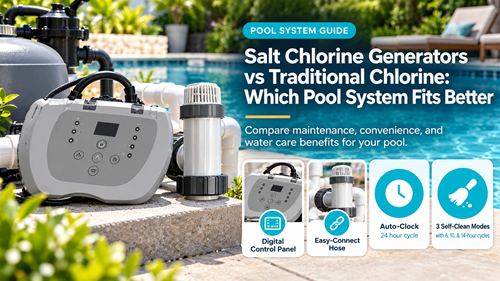

Salt chlorine generators vs chlorine is not a comparison between chlorine and a chlorine-free pool. Both approaches rely on chlorine to sanitize the water. A traditional pool adds chlorine products directly, while a salt system uses an electrolytic cell to generate chlorine from dissolved salt as the circulation system runs.
The better fit depends on installation budget, equipment space, willingness to handle chlorine products, desired automation, water chemistry habits, climate, pool usage, and the cost of replacing a salt cell later. Looking at the complete ownership cycle is more useful than choosing on water feel alone.
Salt Chlorine Generators Vs Chlorine: The Core Difference
In traditional chlorination, the owner or an automated feeder introduces chlorine in liquid, tablet, granular, or another approved form. A salt system creates chlorine at the equipment pad from chloride already dissolved in the pool. The sanitizer doing the work in the water is still chlorine, so testing targets do not disappear when a generator is installed.
This matters because some buyers expect salt water pools to eliminate chlorine-related maintenance. In reality, the source of chlorine changes, while filtration, brushing, debris removal, pH management, and sanitizer testing remain part of the routine.
A generator adds equipment that must be sized and maintained, but it also reduces the need to carry and dose routine chlorine manually. That trade-off is the heart of the comparison.
Compare Cost, Convenience, and Control
Chlorine Source and Handling
Owners evaluating chlorine alternatives should note that salt chlorination is an alternative delivery method, not an alternative disinfectant. The cell produces chlorine electrochemically rather than requiring the same frequency of manual product additions.
Chemical Cost Is Only One Line Item
A useful pool chemical comparison includes generator purchase price, electrical installation, plumbing changes, cell replacement, salt, supplemental chlorine when needed, and the time required for testing and adjustments.
Automation Can Reduce Daily Handling
With automatic pool chlorination, output can be adjusted as a percentage of pump runtime. That can make routine sanitizer delivery more consistent, but it still needs to be matched to measured free chlorine.
Maintenance Does Not Disappear
Different pool maintenance options shift the tasks rather than eliminating them. Traditional systems emphasize chlorine dosing and storage; salt systems add cell inspection, salt monitoring, flow diagnostics, and eventual cell replacement.
Water Testing Remains Non-Negotiable
For residential water treatment, CDC advises regular chlorine and pH testing. That guidance applies whether chlorine comes from a salt cell or a manually added product.
Side-by-Side Ownership Comparison
| Decision Area | Salt Chlorine Generator | Traditional Chlorine |
|---|---|---|
| Upfront equipment | Higher because controller and cell are added | Usually lower if basic dosing is used |
| Routine chlorine handling | Lower for normal daily production | More frequent purchasing, storage and dosing |
| Water testing | Still required | Still required |
| Equipment maintenance | Cell, sensors, flow and controller | Feeder or dosing equipment plus storage practices |
| Major replacement item | Salt cell after its service life | Feeder/pump components depending on setup |
| Best fit | Owners prioritizing automation and steady production | Owners prioritizing simplicity and lower initial equipment cost |
Neither column is universally better. A heavily used sunny pool can challenge an undersized salt cell, while a traditional chlorine routine can become inconvenient if the owner is frequently away. Match the system to the real operating pattern.
Choose Based on the Way You Maintain Your Pool
Questions to Ask Before Switching
- What is the verified pool volume?
- How many hours does the pump normally run?
- Is the equipment pad ready for a cell and controller?
- Is electrical work required?
- How comfortable are you storing chlorine products?
- Do you already use pool automation?
- Who will test free chlorine and pH?
- What is the expected replacement-cell cost?
If you are converting an existing pool, review plumbing compatibility and the condition of the current equipment before buying. A compatibility guide can help separate cell sizing from controller, power, plumbing, and sensor compatibility.
Do Not Choose by Marketing Claims Alone
Claims such as softer-feeling water, low maintenance, or automatic sanitation can be useful descriptions, but they should be translated into actual ownership tasks. Salt systems still need balanced water and inspection. Traditional chlorine still can be automated with feeders or dosing equipment. The best choice is the one the owner can monitor consistently.
For many homeowners, the decision ultimately comes down to whether they prefer more equipment upfront in exchange for automated chlorine generation, or a simpler equipment setup with more direct chemical handling. Either can maintain clean water when correctly operated.
Pick the System You Can Operate Consistently
The salt chlorine generators vs chlorine decision is less about finding a universally superior sanitizer and more about choosing a chlorine-delivery system that fits your budget and maintenance habits. Salt generation adds convenience and steady production; traditional chlorine can keep the equipment pad simpler.
Whichever route you choose, test the water, keep circulation and filtration in good condition, correct pH, respond to heavy swimmer load, and maintain enough free chlorine for the pool conditions. Consistency matters more than the label on the chlorination method.
Frequently Asked Questions
Is a saltwater pool still a chlorine pool?
Yes. A salt chlorine generator converts chloride in the water into chlorine sanitizer.
Which system has the lower upfront cost?
Traditional manual chlorination usually has lower equipment cost, while salt systems add a controller, cell and possible installation work.
Do salt pools require less testing?
No. Free chlorine and pH still need routine testing and adjustment.
Can a salt generator eliminate supplemental chlorine completely?
Not always. Unusual demand, startup, contamination events, or equipment problems can require additional treatment according to pool-care guidance.
What is the main long-term replacement cost in a salt system?
The electrolytic cell is a wear item and eventually needs replacement after its usable service life.
