
A practical saltwater pool maintenance routine combines water testing, circulation checks, cell inspection, surface cleaning, and seasonal planning. A salt system makes chlorine from dissolved salt, but it does not remove the need to monitor water balance, filters, equipment, and sanitizer output.
Record readings instead of relying only on the generator display. Follow the pool and equipment manuals.
Weekly Saltwater Pool Maintenance Tasks
Test the water on a consistent schedule and compare results with the ranges specified for the pool, finish, equipment, and local conditions.
| Maintenance area | What to check | Why it matters | What to verify |
| Salt level | Independent test and system reading | Incorrect salt can affect output | Manufacturer operating range |
| Sanitizer | Current chlorine level | Confirms the pool is being sanitized | Test method and target range |
| Water balance | pH, alkalinity, hardness, and stabilizer | Helps limit scale and corrosion | Pool-specific recommendations |
| Circulation | Pump, filter, returns, and flow | Supports chlorine distribution | Run time and equipment settings |
| Salt cell | Debris, scale, leaks, and alerts | Helps identify maintenance needs | Inspection and cleaning schedule |
| Pool surfaces | Steps, walls, floor, and waterline | Removes debris before it builds up | Surface-safe tools and cleaners |
Test Salt Independently
A generator reading can be useful, but compare it with an independent method when the number looks unusual or after adding water or salt.
The Hayward digital handheld salt meter can provide a separate reading, but verify calibration needs, measurement range, storage, and compatibility with pool-water testing.
Add salt only after confirming pool volume, current salt concentration, and the equipment target. Distribute it according to the salt and system instructions, and never pour salt directly into the skimmer unless the manufacturer permits it.
Use Test Strips Correctly
The AquaChek salt water test strips may support routine salt checks, but buyers should verify the current test range, sample method, timing, storage conditions, and expiration date.
Use clean, dry hands and compare the strip at the specified time. Wet containers, old strips, or delayed reading can make results less reliable.
Inspect the Cell and Flow
Turn off power and follow the manual before inspecting the cell. Look for calcium buildup, debris, leaks, cable damage, and warning messages.
A saltwater pool maintenance log should note cell inspections, cleaning dates, output settings, water temperature, and any repeated alerts.
Check the filter, baskets, water level, valves, and return flow when the generator reports low or no flow. Do not replace a flow switch or cell before confirming the cause.
Manage Scale and Water Balance
The HTH Pool Salt Cell Saver considered as part of a compatible care routine, but verify label directions, pool volume, chemical compatibility, application timing, and whether the product suits the current water conditions.
Never mix pool chemicals together or add them through the same container. Wear the protection required by each label and store chemicals in their original containers away from heat, moisture, children, and pets.
Plan Seasonal Opening
An RX Clear saltwater pool opening kit may combine several opening products, but buyers should verify the current contents, pool-volume guidance, ingredient compatibility, application order, and testing requirements.
Test the water before adding an opening kit. Do not assume every included product is need for every pool.
Monthly and Seasonal Checks
Inspect the pump, filter pressure, electrical connections, cell cable, unions, O-rings, and control-panel messages. Compare chlorine output with water temperature, bather load, sunlight, and pump run time.
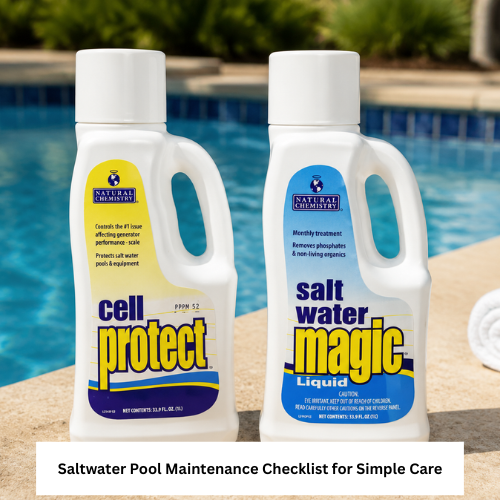
A Natural Chemistry salt water maintenance kit compare for ongoing care, but verify current ingredients, dosage instructions, pool compatibility, and whether the kit overlaps products already in use.
Clean baskets and filters according to their manuals, brush suitable surfaces, and remove debris.
Troubleshooting Common Problems
Low chlorine may result from low output settings, short circulation time, dirty filters, scale, cold water, high demand, or incorrect water balance.
A high salt warning confirmed with an independent test before draining water. A low salt warning may come from actual salt loss, a testing difference, temperature, or equipment problems.
Cloudy water need testing before output is increased.
Common Buying Mistakes
Avoid buying chemicals before testing, adding salt from the display reading alone, or choosing a meter without checking calibration and range. Another mistake is cleaning the cell on a fixed schedule even when inspection shows no scale.
Buyers can review an AquaChek salt water test strip listing as an external comparison, then verify the current range, strip count, storage guidance, seller details, and return terms.
Saltwater Pool Maintenance Buying Checklist
- Confirm pool volume, system model, and recommended salt range.
- Compare generator readings with an independent test.
- Check pH, sanitizer, alkalinity, hardness, and stabilizer.
- Review filter pressure, baskets, flow, and pump run time.
- Inspect the cell, unions, cable, and warning lights.
- Confirm product labels, chemical compatibility, and safe storage.
- Plan seasonal opening, closing, and cold-weather protection.
- Check replacement parts, warranty, return policy, delivery, and support.
- Verify before buying when dosage or compatibility is unclear.
Conclusion
Consistent saltwater pool maintenance depends on accurate testing, balanced water, reliable circulation, careful cell inspection, and changes based on actual readings. Salt chlorine generators offers relevant meters, strips, care products, and opening supplies for pool owners building a practical routine.
FAQ
How often should salt levels be tested?
Follow the system guidance and test again after heavy rain, water replacement, salt additions, or an unusual display reading.
Does a saltwater pool need chlorine testing?
Yes. Test the actual sanitizer level rather than assuming the generator output setting confirms the water condition.
Why is the salt cell building scale?
Water balance, hardness, temperature, and operating conditions can contribute to calcium buildup.
Should salt be added when the display reads low?
Confirm the result independently and calculate the required amount before adding salt.
Does a salt system replace filter maintenance?
No. Pumps, filters, baskets, and circulation still require routine inspection and cleaning.
