
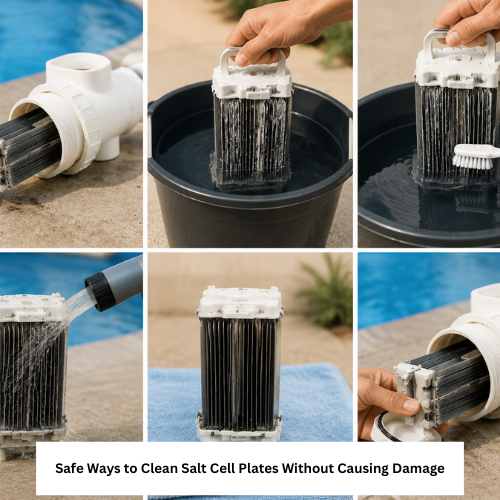
Before you clean salt cell plates, shut down the circulation system, disconnect power as instructed, and confirm the cell model and cleaning procedure in the manufacturer manual. Cleaning too often or using the wrong tool can shorten cell life, damage coatings, or create a chemical safety risk.
Salt cell cleaning should begin with inspection rather than automatic acid washing. Light debris may rinse away with water, while hard calcium buildup may require the approved cleaning method for that exact cell.
How to Clean Salt Cell Plates Safely
Use the least aggressive method that can remove the deposit. Never scrape coated plates with a screwdriver, wire brush, knife, or other metal tool.
| Cell condition | Safer first step | What to avoid | What to verify |
| Loose dirt or leaves | Gentle water rinse | High-pressure spray close to plates | Approved rinse direction |
| Light scale | Soak or rinse only as the manual directs | Repeated chemical cleaning | Cell model instructions |
| Heavy calcium buildup | Manufacturer-approved cleaning solution | Guessing acid strength or soak time | Chemical label and cell compatibility |
| Damaged or worn plates | Stop and inspect for replacement | Scraping or bending plates | Warranty and replacement model |
| Repeated buildup | Correct water balance and inspect flow | Cleaning without fixing the cause | pH, hardness, flow, and salt level |
Shut Down and Remove the Cell
Turn off the pump, chlorinator, and electrical supply according to the equipment instructions. Relieve system pressure before loosening unions.
A salt cell wrench for Hayward TurboCell may help with compatible unions, but verify the union size, cell model, tool fit, and safe removal procedure before buying.
Support the cell while disconnecting it. Do not pull on cables, twist electrical connections, or force a union that remains pressurized.
Inspect Before Using Chemicals
Look through the cell for white or crusty deposits, debris, damaged plates, loose connections, or discoloration.
Do not clean salt cell components with acid unless the manufacturer specifically recommends it for visible scale. Unnecessary acid exposure may reduce the usable life of some cells.
Use a Compatible Cleaning Stand
A pool cleaning stand for Hayward Turbo Cells can hold a compatible cell during the approved soaking process, but confirm thread fit, seal condition, cell orientation, and chemical compatibility.
Place the stand on a stable chemical-resistant surface away from children, pets, plants, metal tools, and pool water. Follow the stand and cell instructions together.
Handle Acid Only When Required
A Pentair IntelliChlor acid washing kit may support compatible IntelliChlor cells, but buyers should verify the exact cell models, current kit contents, cleaning directions, and protective equipment requirements.
Wear the protection listed on the chemical label. Work in a ventilated area and avoid splashing. Never mix acid with chlorine, bleach, or another pool chemical. Add and dispose of cleaning solution only as directed by the product label, equipment manual, and local rules.
Rinse and Reinstall Correctly
Rinse the cell thoroughly using the approved method. Inspect O-rings, unions, threads, and cable connections before reinstalling.
Restore valves, power, and circulation in the correct sequence. Check for leaks and confirm that flow and cell indicators return to normal.
Troubleshooting After Cleaning
If the system still reports low output, inspect salt level, water temperature, flow, cable connections, control settings, and cell age. A clean appearance does not confirm that the cell can still generate chlorine correctly.
A W3T CELL 15 replacement salt cell may be considered when a compatible cell is worn or damaged, but verify system compatibility, control settings, unions, warranty, and installation requirements.
Repeated calcium buildup often points to water-balance or circulation problems. Test the water and correct the cause rather than increasing cleaning frequency.
Cleaning and Storage Maintenance
Rinse and dry reusable stands and tools before storage. Inspect unions and O-rings, and replace damaged seals with compatible parts.
Common Buying Mistakes
Avoid buying a stand or washing kit only by appearance, assuming all cells use the same thread, or using a generic acid ratio without the cell manual. Another mistake is replacing the cell before checking flow, salt readings, wiring, and water balance.
Shoppers can review a Hayward GLX CELLSTAND cleaning stand listing as an external comparison, then verify current compatibility, materials, seller details, warranty, and return terms.
Clean Salt Cell Tool Checklist
- Confirm the cell brand, model, and cleaning instructions.
- Inspect the plates before choosing a cleaning method.
- Verify stand threads, union size, and tool compatibility.
- Use only approved chemicals and protective equipment.
- Check ventilation, splash control, and safe disposal requirements.
- Inspect O-rings, cables, fittings, and flow after reinstallation.
- Review cleaning frequency and water-balance causes.
- Check replacement parts, warranty, return policy, delivery, and support.
- Verify before buying when compatibility or kit contents are unclear.
Conclusion
The safest way to clean salt cell plates is to inspect first, use the least aggressive approved method, handle chemicals carefully, and correct the water conditions that caused scale. Salt chlorine generators offers relevant cleaning stands, tools, kits, and replacement cells for owners comparing maintenance options.
FAQ
How often should a salt cell be cleaned?
Inspect it on the schedule in the manufacturer manual and clean only when buildup or operating guidance indicates it is needed.
Can I scrape calcium from the plates?
Do not use metal or sharp tools. Follow the approved rinse or soaking method for the exact cell.
Is acid always required for salt cell cleaning?
No. Loose debris or light deposits may need only an approved water rinse.
Why does calcium return quickly?
High pH, water hardness, circulation issues, and other balance problems can contribute to repeated scale.
Can I reinstall the cell while it is wet?
Follow the manufacturer instructions, dry electrical connections as required, and inspect seals before restarting the system.
