
Quick Answer
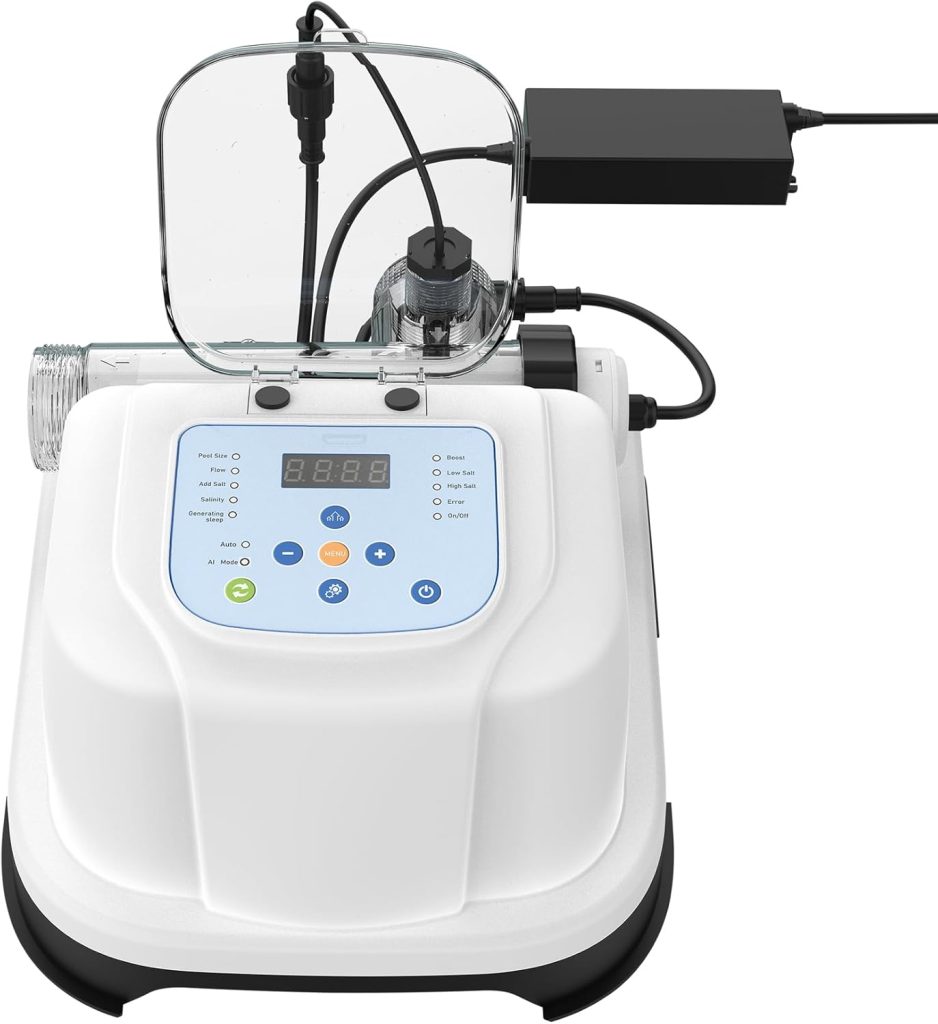
Most salt chlorinator problems come from one of five causes: low salt, poor water flow, a dirty salt cell, incorrect output settings, or an aging cell. Start troubleshooting with the easiest checks first. Confirm water level, pump flow, salt reading, and cell cleanliness before replacing parts.
If the system is undersized or no longer reliable, compare options in the best salt chlorinator guide. If only the cell is failing, use the salt cell replacement guide before ordering a new part.
Salt Chlorinator Troubleshooting Table
| Problem | Likely Cause | First Fix |
| Low chlorine | Low output, short runtime, dirty cell, or low stabilizer | Increase runtime, clean cell, and test water chemistry. |
| No flow warning | Pump issue, clogged filter, closed valve, or flow switch issue | Check water movement and clean the filter. |
| Low salt warning | Actual low salt, cold water, dirty cell, or sensor error | Test salt manually before adding more salt. |
| High salt warning | Too much salt or incorrect sensor reading | Confirm with a separate salt test. |
| Cloudy water | Not enough chlorine production or poor filtration | Shock if needed, clean filter, and extend pump time. |
| Inspect cell alert | Scale, old plates, or maintenance timer | Inspect and clean the cell, then reset if appropriate. |
Step 1: Test the Water Before Touching the Equipment
Troubleshooting should start with water testing. A salt chlorinator cannot fix poor water balance by itself. Test free chlorine, pH, alkalinity, stabilizer, calcium hardness, and salt level. Use a separate salt test instead of trusting only the control panel reading.
Low stabilizer can make chlorine disappear quickly in sunlight. High pH can make chlorine less effective. High calcium can create cell scale. This is why a system may look broken when the real issue is water chemistry.
For salt dosing, use the pool salt calculator guide before adding salt to the water.
Step 2: Check Pump Flow and Filtration
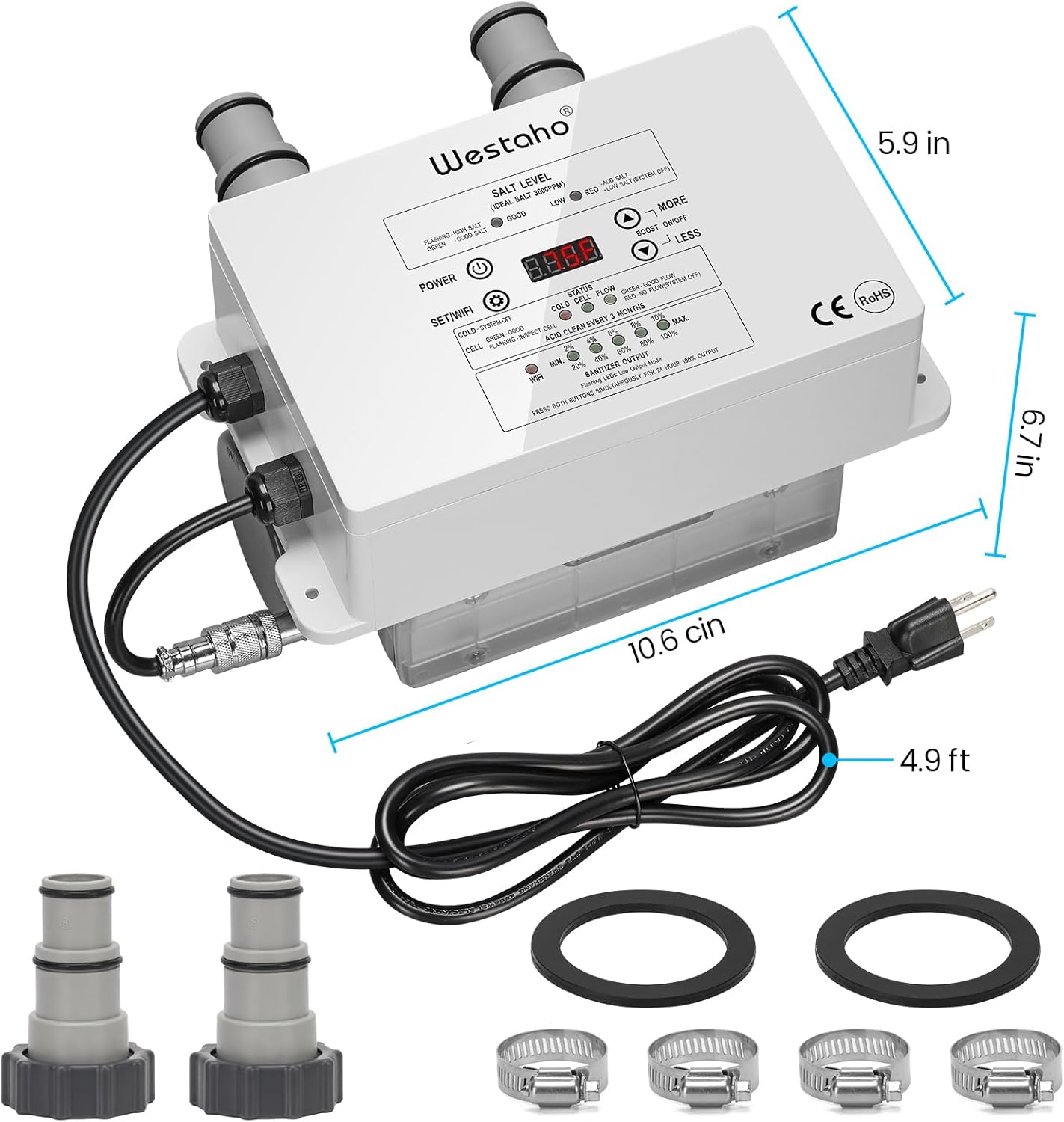
A salt chlorinator needs steady water flow. If water flow is weak, the system may stop producing chlorine or show a no flow warning. Check the skimmer basket, pump basket, filter pressure, valve position, and return jets. Low pump speed can also trigger flow issues on some systems.
If the filter is dirty, clean or backwash it before assuming the chlorinator is bad. Also check whether the flow switch arrow points in the correct direction. A simple plumbing or flow issue can create repeated alerts.
Step 3: Inspect the Salt Cell
A dirty salt cell is one of the most common reasons for weak chlorine output. Remove the cell after turning off power, then look for white scale on the plates. Light scale may rinse away. Heavy scale may require approved cleaning methods.
For detailed maintenance steps, follow the salt cell cleaning guide. If cleaning does not restore performance, compare replacement options through replacement kits.
Step 4: Review Output Settings and Pump Runtime
Many salt systems are not defective; they are simply set too low for the season. Hot weather, heavy swimming, rainfall, and high sunlight can increase chlorine demand. If output is too low or pump runtime is too short, the pool may become cloudy even when the chlorinator is working.
| Condition | Possible Adjustment |
| Hot summer weather | Increase output percentage or pump runtime. |
| Heavy swimmer load | Run the system longer after use. |
| New saltwater conversion | Monitor chlorine daily for the first week. |
| Cloudy water after rain | Check chlorine and balance water before changing equipment. |
Step 5: Know When It Is a System Problem
If salt level, flow, water chemistry, output settings, and cell cleanliness all check out, then the issue may be electrical or system-related. A failing control board, bad sensor, damaged cable, or incompatible replacement cell can cause repeated warnings.
For brand-specific decisions, review the Hayward vs Pentair salt system comparison. For complete replacements, compare systems in salt chlorine generators and generator kits.
Final Verdict
Good salt chlorinator troubleshooting follows a clear order. Test the water first, confirm flow, inspect the cell, review output settings, and then evaluate parts. This prevents unnecessary replacement and helps identify the real reason chlorine production is weak.
If the cell is old or the system is undersized, replacing parts may be better than repeated troubleshooting. If the system is newer, the issue is often chemistry, flow, or cleaning.
FAQs
Why is my salt chlorinator not making chlorine?
Low salt, poor flow, dirty cell plates, low output settings, or worn cell plates are common causes.
Can low salt cause cloudy pool water?
Yes. If salt is too low, the chlorinator may not produce enough chlorine to keep water clear.
Why does my salt system say no flow?
The pump may not be moving enough water, or the filter, valve, or flow switch may need attention.
Should I add salt when the panel says low salt?
Test the water with a separate salt test first. A dirty cell or sensor issue can cause a false reading.
When should I replace the salt cell?
Replace it when cleaning and water balance do not restore output and warnings keep returning.
