
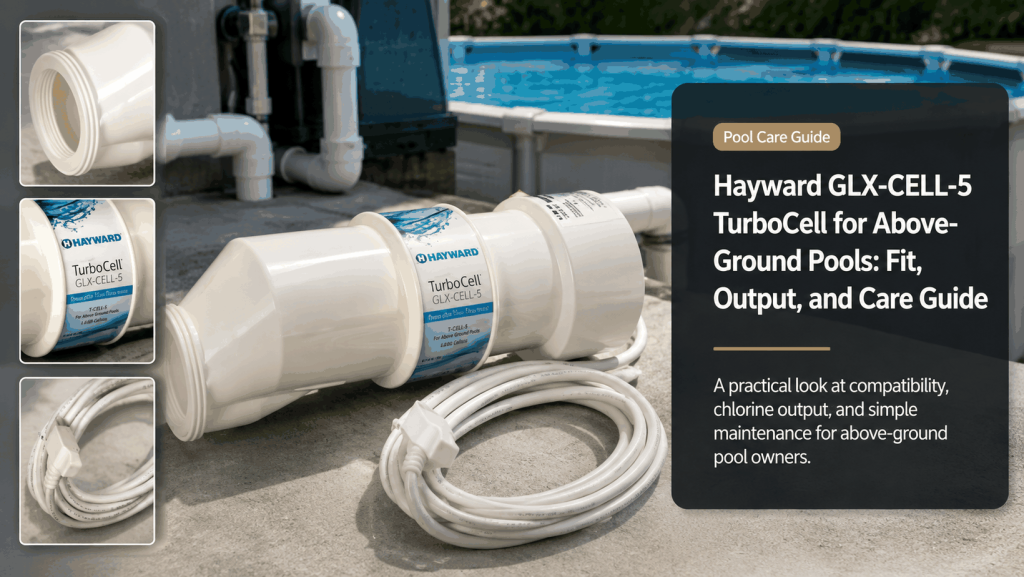
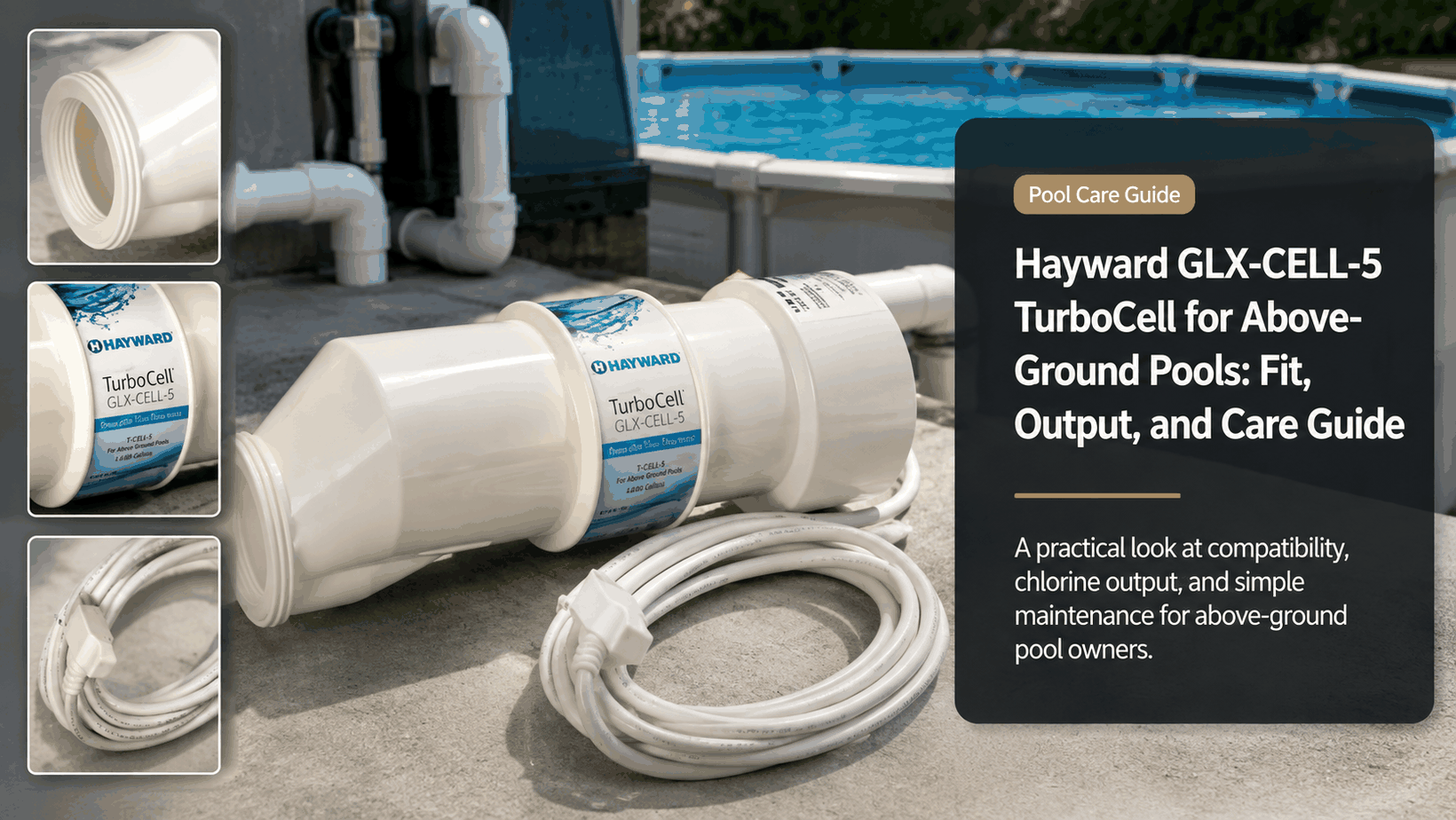
The Hayward GLX-CELL-5 TurboCell sits in a different buying context from the larger inground AquaRite cells: above-ground pools often use shorter seasonal run periods, hose or return-jet plumbing, and compact control systems. That makes physical fit and system family just as important as gallon rating.
Before replacing the cell, confirm whether low chlorine is caused by the cell or by seasonal demand, low flow, scale, salt level, or short pump runtime. Above-ground water can warm quickly and see heavy swimmer load, so output needs can change sharply from one week to the next.
Hayward GLX-CELL-5 TurboCell Fit And Capacity
Begin with measured water volume rather than the pool’s nominal diameter alone. Water depth, wall shape, and fill level can change the actual gallons, and that difference matters when the chlorinator operates near its rated capacity.
The site’s model listing identifies the GLX-CELL-5 above ground pool application and gives a direct reference for the exact cell family.
Use The 20K Rating As A Ceiling
A pool below the maximum rating gives the cell more operating headroom during hot weather. A pool near the ceiling may require longer circulation or higher output during periods of intense sun and use.
If you are comparing a 20,000 gallon Hayward cell, confirm that the alternate listing is compatible with the exact control system rather than treating capacity alone as interchangeability.
AquaTrol And Above-Ground Compatibility
Hayward above-ground systems can use different plumbing arrangements. A cell that has the right capacity can still be the wrong choice if the control unit, cable, fitting style, or installation orientation differs.
An AquaTrol TurboCell option shows how the cell operates as part of a complete above-ground chlorination system.
Do not modify line-voltage connections, cut cell cables, or bypass a flow switch to make a replacement fit. Match listed components and use a qualified technician whenever electrical diagnosis is required.
How To Judge Chlorine Output
Test free chlorine independently and look at the trend over several normal operating days. A one-day drop after a pool party or storm is not enough evidence to condemn the cell.
Good above-ground salt cell care starts with balanced water, adequate circulation, and routine inspection instead of reacting to every low reading with aggressive cleaning.
Check Output In Context
Compare output setting, pump runtime, water temperature, stabilizer, pH, and swimmer load. If water chemistry and flow are correct but production continues to decline, cell wear becomes more plausible.
Use another product reference to compare GLX-CELL-5 output with the needs of the actual pool rather than assuming every above-ground chlorinator produces the same amount.
Cleaning And Seasonal Care
Mineral scale on the plates can reduce performance and distort readings. Inspect before cleaning. If cleaning is required, use Hayward’s current safety procedure, protective equipment, and a proper cell stand; avoid frequent acid exposure when the cell is already clean.
For the safest Hayward cell cleaning routine, follow the manufacturer troubleshooting guide instead of improvised chemical ratios or unverified online instructions.
At seasonal shutdown, follow the system’s winterization guidance. Protect the control equipment and plumbing from freeze damage and store removable components only as the manufacturer directs.
Replacement Planning Before The Pool Opens
- Confirm actual pool volume
- Identify AquaTrol/control model
- Photograph the old cell label
- Inspect fittings and unions
- Check cable and connector condition
- Test salt and free chlorine
- Inspect for scale
- Resolve flow restrictions
- Review last season’s output trend
- Order only after compatibility is confirmed
A preseason check gives time to resolve a controller or plumbing problem before the first heavy-use weekend. It also prevents unnecessary replacement of a cell that only needed correct chemistry or flow.
When To Call A Pool Professional
Use a professional when the control unit shows power faults, wiring damage, repeated breaker problems, or another condition that requires opening an electrical enclosure. The cell itself is only one component in the chlorination system.
If chlorine remains low after a verified cell replacement, test water chemistry and circulation again before increasing output indefinitely.
Hayward GLX-CELL-5 TurboCell Ownership Records
Keep a simple service record for the Hayward GLX-CELL-5 TurboCell: installation date, pool volume, salt test results, output setting, pump runtime, cleaning dates, warning lights, diagnostic readings, and any replacement parts. A seasonal record makes it easier to distinguish gradual component wear from a sudden chemistry, flow, or configuration problem.
When performance changes, compare the new readings with the last period when the pool was stable. That history is more useful than replacing several parts at once, and it gives a pool professional better evidence if advanced electrical or controller diagnosis is needed.
Also record major seasonal changes such as unusually hot weather, a new pump schedule, filter service, heavy swimmer use, or a chemistry correction. Those events can change chlorination behavior without indicating hardware failure, and they make future replacement decisions more evidence-based.
Frequently Asked Questions
Is GLX-CELL-5 for above-ground pools?
It is sold for compatible Hayward above-ground salt-chlorination applications. Confirm the exact AquaTrol/control system and fittings.
Does the 20,000-gallon rating mean it is ideal at exactly 20,000 gallons?
It is a maximum rating reference. Real chlorine demand, climate, and pump runtime determine how much operating headroom is available.
Can I use the cell with any Hayward salt controller?
No. Verify the listed system and cell compatibility before buying.
How do I know whether low chlorine is a cell problem?
Check water chemistry, salt, flow, pump runtime, output setting, and plate condition before concluding the cell is worn.
Should the cell be cleaned before every season?
Inspect it first. Clean only when deposits or diagnostic conditions justify it, using the manufacturer’s current procedure.
