
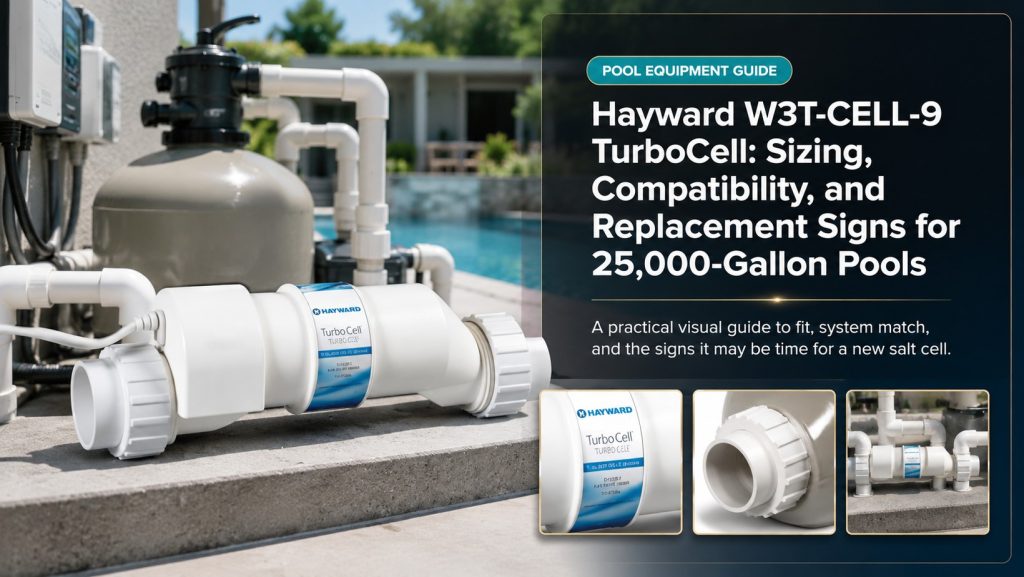
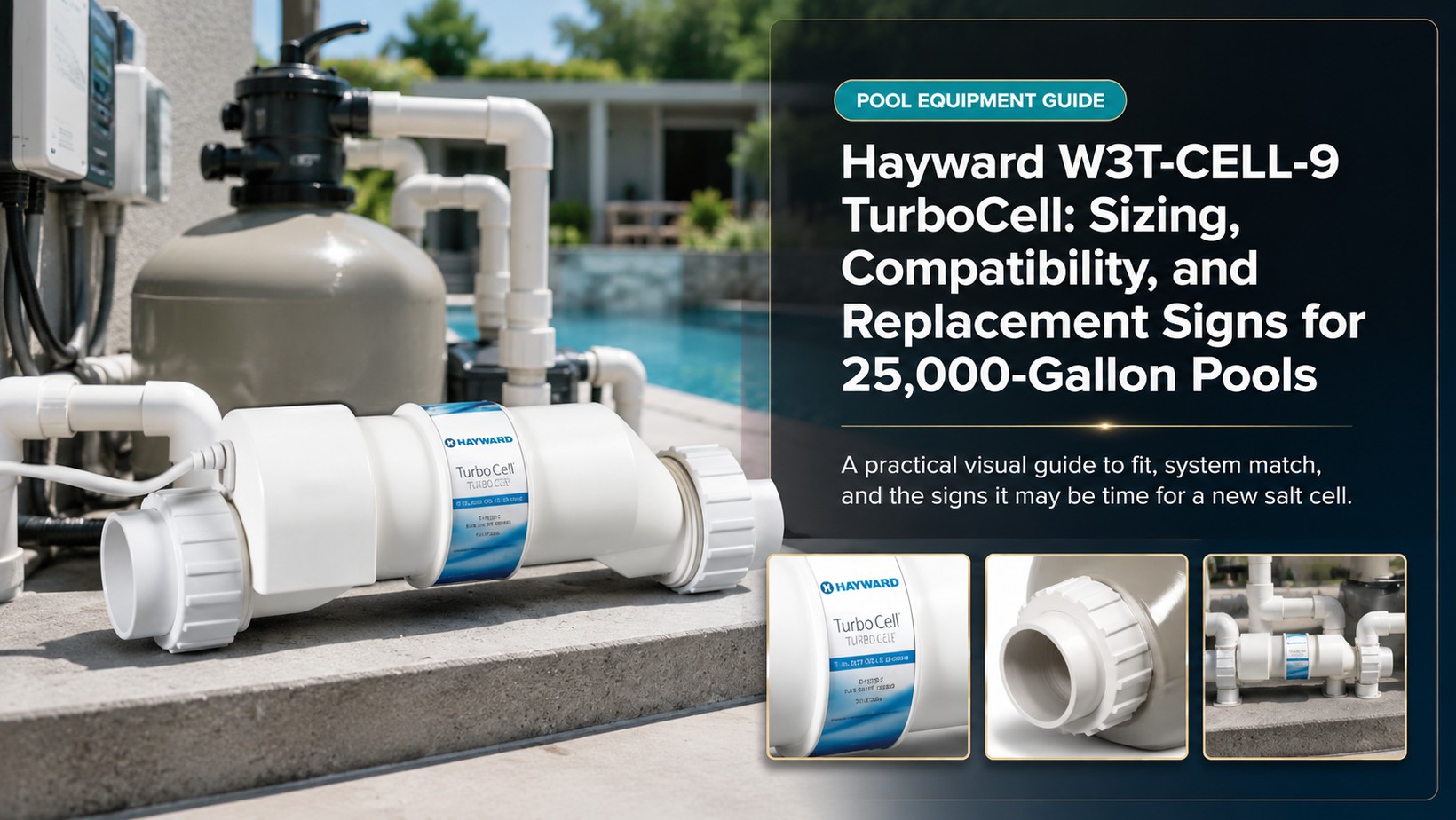
The Hayward W3T-CELL-9 TurboCell is easiest to buy correctly when you treat capacity, controller compatibility, and cell condition as three separate checks. A pool that is close to the 25,000-gallon rating can be a reasonable match, but actual chlorine demand changes with sun exposure, swimmer load, water temperature, circulation time, stabilizer level, and seasonal conditions.
For an existing AquaRite owner, replacement should begin with the model label on the installed cell and the cell type programmed into the controller. A wrong programmed cell type can distort salt readings and create symptoms that look like a worn cell. The goal is to confirm the system before spending money on a replacement.
How The Hayward W3T-CELL-9 TurboCell Fits A 25,000-Gallon Pool
A cell rating is a maximum design reference, not a guarantee that every pool at that volume will need the same pump time or output percentage. A sunny pool with frequent swimmers can have substantially higher chlorine demand than a shaded, lightly used pool of the same volume.
Use the exact product specification when confirming T-Cell-9 pool capacity. Compare that rating with a realistic pool-volume estimate instead of the pool builder’s rounded marketing size.
Allow Headroom For Real Chlorine Demand
If the pool normally runs the cell near maximum output for long periods, capacity headroom may be limited. Before upsizing or downsizing, confirm what cell types the controller supports and whether changing the cell size requires a controller setting change.
A complete Hayward system page can help verify AquaRite cell compatibility alongside the cell label, controller revision, and Hayward documentation.
Compatibility Checks Before Ordering
Photograph the existing cell label, controller display, plumbing unions, cable connection, and current diagnostic readings before removal. Those records make it easier to compare the existing installation with a new cell and prevent a model-name assumption from driving the purchase.
If the existing cell is several seasons old, review TurboCell replacement timing together with its operating history. Calendar age alone is less useful than output consistency, salt-reading accuracy, plate condition, and verified water chemistry.
Confirm The Pool And Controller As One System
A replacement cell must physically fit the plumbing and electrically match the controller. Do not change wiring, open a high-voltage control panel, or bypass safety devices to make an incompatible part work. High-voltage diagnosis belongs to a qualified pool technician or electrician.
For owners building around this size class, a 25,000 gallon salt pool cell reference helps compare the cell with the corresponding AquaRite system capacity.
Replacement Signs Worth Confirming
Low chlorine does not automatically mean a failed cell. First verify free chlorine with an independent water test, confirm the salt concentration with a reliable test, inspect the cell for scale, check that the correct cell model is selected in the controller, and make sure circulation and flow are normal.
Hayward’s official AquaRite troubleshooting document is the best reference for Hayward cell diagnostics, including cell-type programming, salt checks, no-flow logic, inspection reminders, and replacement decision points.
| Observation | What to Check First | Why It Matters |
|---|---|---|
| Low chlorine | Water chemistry, output setting, pump runtime | Demand or runtime can mimic a weak cell |
| Salt reading differs from test | Cell cleanliness and programmed cell type | Scale or wrong configuration can distort the display |
| Inspect Cell reminder | Plate condition and operating hours | A reminder is not automatic proof of failure |
| No Flow warning | Pump flow, valves, filter, flow switch | The cell should not produce without confirmed flow |
| Repeated low output after checks | Cell age, diagnostics, warranty | Replacement becomes more plausible after other causes are excluded |
Maintenance That Protects Cell Performance
Inspect the electrolytic plates periodically for mineral scale instead of cleaning on a fixed aggressive schedule. Unnecessary acid cleaning can shorten cell life. When cleaning is actually needed, follow Hayward’s current manual, use appropriate protective equipment, and handle chemicals only in a properly ventilated area.
A dedicated cleaning accessory can make T-Cell-9 maintenance easier by supporting the cell in the intended position; the cleaning solution and safety procedure still need to follow Hayward instructions.
Keep pool pH, salt, stabilizer, calcium hardness, and circulation within the ranges specified for the system. Correct water balance reduces scale formation and keeps diagnostic readings more useful when performance changes.
A Practical Replacement Checklist
- Confirm actual pool volume
- Photograph the current cell model and serial information
- Verify the controller is AquaRite-compatible
- Confirm the programmed cell type
- Test salt independently
- Inspect plates for scale or damage
- Check pump flow and filter condition
- Review diagnostic readings before replacement
- Confirm union and cable fit
- Check warranty status before discarding the old cell
After a correct replacement, follow the manufacturer procedure for the controller’s cell-type setting and average-salt reset. Do not assume a new cell will fix poor water balance or inadequate circulation; verify chlorine production after the system has had enough normal operating time.
When Replacement Is The Better Decision
Replacement becomes a stronger decision when the pool volume and controller are correct, the cell is clean, independent salt testing is reasonable, flow is normal, and the cell still cannot produce or report consistently. If the controller itself has display, power, or electrical faults, diagnose that separately before ordering another cell.
If diagnosis requires removing the AquaRite panel or testing line voltage, stop and use a qualified technician. Hayward’s troubleshooting guide specifically warns about hazardous voltage inside the control center.
Frequently Asked Questions
Is the W3T-CELL-9 intended for a 25,000-gallon pool?
It is sold as a cell for pools up to the 25,000-gallon class. Confirm actual volume, chlorine demand, and controller compatibility before buying.
Can a wrong AquaRite cell setting affect salt readings?
Yes. Hayward documents that the controller must be programmed for the installed TurboCell type; an incorrect selection can cause inaccurate readings and interrupted chlorination.
Does an Inspect Cell light always mean the cell is bad?
No. It can be an inspection reminder or indicate a condition that needs diagnosis. Inspect the cell, water chemistry, salt reading, and system configuration first.
Should a TurboCell be acid-cleaned on a fixed schedule?
Inspect first and clean only when needed, using the current manufacturer procedure. Unnecessary aggressive cleaning can reduce cell life.
What should I record before replacing the cell?
Record the model, serial number, controller setting, salt readings, output setting, pool volume, water test results, and photos of the plumbing and cable connection.
