
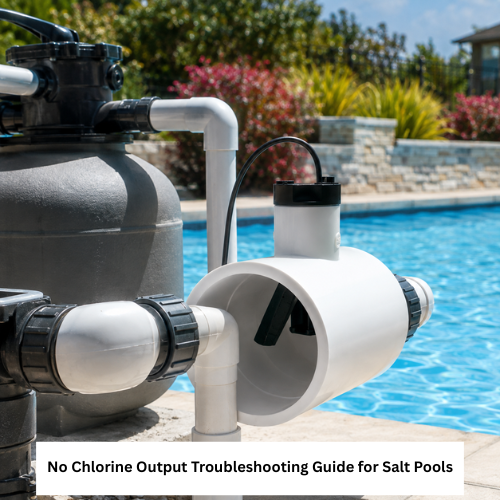
When a saltwater system has no chlorine output, the cell is not always the first part that should be replaced. Low circulation, an incorrect salt reading, cold water, short pump runtime, scale, controller settings, or a failed component can all interrupt or reduce production.
At salt chlorine generators, owners can compare replacement parts, but troubleshooting should begin with safe observations and independent water testing. Turn off power before opening equipment or disconnecting components, and use a qualified pool professional for electrical or bonding work.
How to Diagnose No Chlorine Output Safely
Start by testing the pool water with a reliable method and compare the result with the control panel. Confirm that the pump is running, valves are open, the filter is not restricting flow, and the cell is installed in the correct direction.
A Hayward flow switch assembly may be relevant when the panel reports no flow even though circulation appears normal, but the exact sensor, cable, tee, and controller compatibility must be verified.
A GLX FLO RP flow switch example can help buyers compare the listed connector, cable, and assembly style before choosing a replacement.
| Symptom | Possible Area | First Check | Avoid | Verify Before Replacing |
| Low salt warning | Water testing or sensor reading | Compare with an independent salt test | Adding salt from the display alone | Recommended salt range |
| No flow message | Pump filter valves or switch | Confirm actual circulation and clean filter condition | Bypassing the safety switch | Exact switch compatibility |
| Cell light off | Power setting temperature or control issue | Check allowed operating conditions and settings | Opening powered equipment | Controller diagnostics |
| Scale on plates | Water balance or maintenance | Inspect using the cell instructions | Unnecessary repeated acid cleaning | Approved cleaning method |
| Normal display but low chlorine | Runtime demand or water balance | Test chlorine and review output and pump hours | Replacing parts without testing | Cell condition and pool demand |
Check Controls Sensors and Cell Condition
An AquaRite main circuit board should be considered only after power supply, display information, configuration, wiring, and other approved diagnostics have been checked by a qualified person.
A Hayward temperature sensor replacement may be relevant when an inaccurate temperature reading prevents normal operation, but sensor resistance, cable length, and controller fit should be verified before buying.
Inspect the cell only after shutting down the system according to the equipment instructions. Look for scale, debris, damaged connections, or visible wear without inserting tools between the plates.
A TurboCell cleaning stand can support an approved cleaning process when scale is present and the user follows the cell manual and chemical label.
Persistent no chlorine output after verified flow, salt, temperature, settings, runtime, and cleaning checks may indicate that the cell can no longer produce normally.
A Hayward compatible replacement salt cell should be selected by exact cell family, controller support, plumbing connection, pool capacity, and warranty terms rather than by a similar appearance.
Water Balance Runtime and Demand Checks
A generator may be producing while measured free chlorine remains low because sunlight, contamination, heavy swimming, or unsuitable water balance consumes chlorine quickly. Test the water and correct conditions using accepted pool guidance before increasing output repeatedly.
Confirm that pump runtime gives the generator enough operating time and that the output percentage is appropriate for current demand. Make one change at a time and retest rather than running the system at maximum without diagnosis.
Do not add salt solely because the panel shows a low salt warning. An inaccurate reading or sensor problem can lead to excessive salt if the water is not tested independently.
Common Troubleshooting Mistakes
Do not bypass a flow switch, bridge safety circuits, open a powered control box, or mix cleaning chemicals. Do not replace the cell before checking controller configuration and actual circulation.
If the display is blank, breakers trip, wiring smells hot, or connections show burning or corrosion, keep the equipment off and arrange qualified service.
Buying Checklist
- Record all display messages and diagnostic readings
- Test free chlorine and salt independently
- Confirm pump flow filter condition and valve position
- Check water temperature output setting and runtime
- Inspect the cell for scale and visible damage
- Verify controller cell sensor and switch compatibility
- Review safe installation and startup requirements
- Check warranty return policy replacements and support
- Confirm delivery timing before draining or opening plumbing
- Verify every product specific claim before buying
Conclusion
If no chlorine output continues after flow, salt, temperature, runtime, water balance, settings, and cell condition are verified, use the controller diagnostics and approved service process to isolate the failed part. Replacing components without confirming compatibility can add cost without solving the cause.
FAQ
Can low salt cause a generator to stop producing chlorine?
Yes, but confirm the salt level with an independent test before adding salt because panel readings can be inaccurate.
Can a dirty filter cause a no flow warning?
A restricted filter can reduce circulation enough to trigger a flow problem, so check the filter and pump system first.
Does cold water affect chlorine generation?
Many systems reduce or stop production outside their allowed temperature range. Verify the limits for the exact model.
Should I replace the flow switch or the salt cell first?
Replace neither until actual flow, diagnostic messages, salt readings, wiring, and cell condition check.
Why is chlorine low when the generator appears to work?
Pump runtime, output setting, sunlight, swimmer load, contamination, or water balance may cause chlorine demand to exceed production.
