
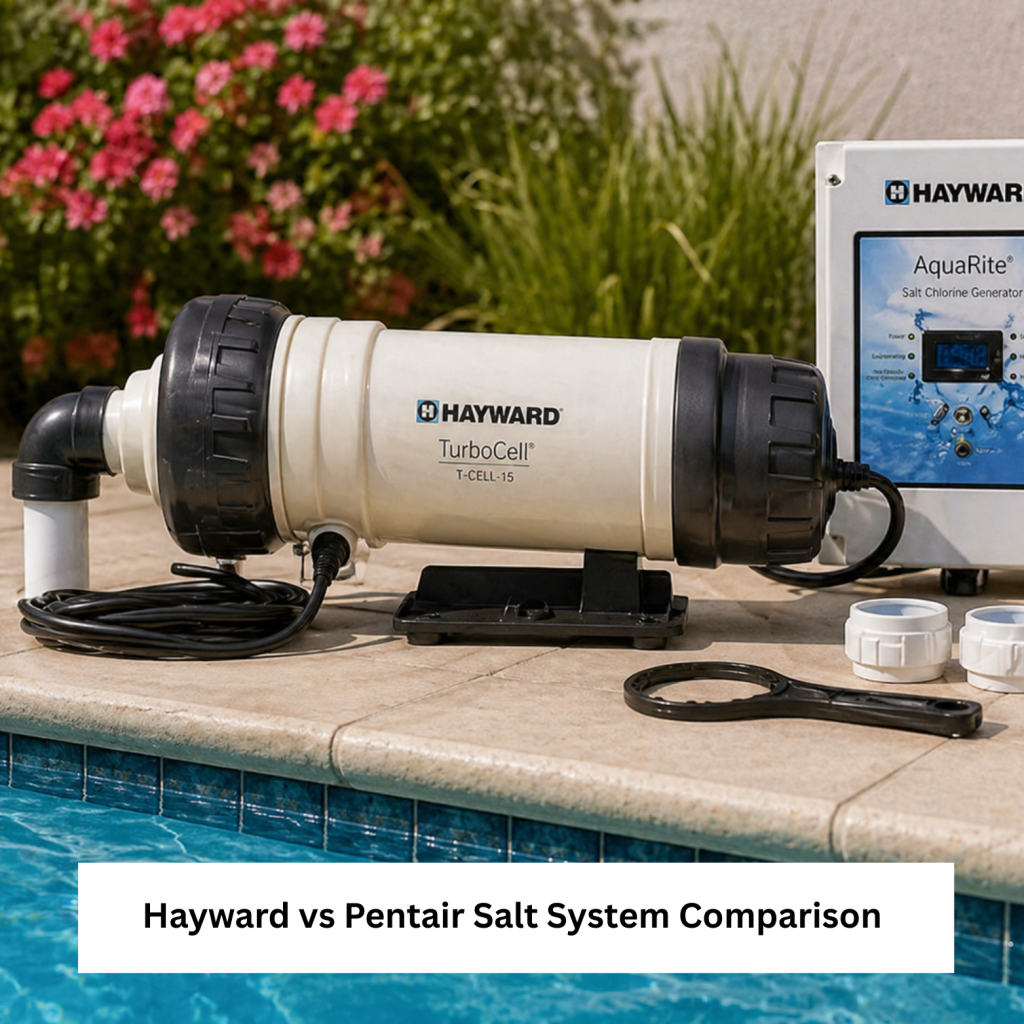
Quick Answer
Hayward and Pentair both offer strong salt systems, but the better choice depends on your existing equipment, pool size, replacement cell cost and automation setup. Hayward is often popular with Aqua Rite style systems and broad replacement cell availability. Pentair is often preferred by pool owners already using Pentair automation, pumps, or IntelliChlor style equipment.
For most pool owners, the winning system is the one that fits the current plumbing and control setup with the least hassle. If you are building a new setup, compare complete options in salt chlorine generators and check future parts in replacement kits before choosing.
Hayward vs Pentair at a Glance
| Factor | Hayward Salt System | Pentair Salt System |
| Best fit | Pools already using Hayward or Aqua Rite style equipment | Pools already using Pentair automation or IntelliChlor systems |
| Replacement cell availability | Often broad and easy to compare | Strong availability for popular IntelliChlor models |
| Automation match | Works best with compatible Hayward controls | Works best with Pentair automation ecosystems |
| Maintenance style | Depends on cell model and water balance | Depends on cell model and water balance |
| Buyer priority | Replacement flexibility and familiar controls | System integration and premium ecosystem fit |
Performance Comparison
Performance depends more on correct sizing than brand name alone. A properly sized Hayward system will usually outperform an undersized Pentair system, and a properly sized Pentair system will outperform an undersized Hayward system. Pool gallons, sunlight, temperature, swimmer load and pump runtime all affect chlorine demand.
When comparing Hayward vs Pentair salt systems, check the cell rating first. A system rated for a larger pool can usually run at a lower output setting. This may help maintain chlorine more consistently during peak summer while reducing strain on the cell.
Salt Cell Replacement Cost and Availability
The salt cell is the part most owners will replace first. Therefore, future replacement cost should be part of the buying decision. Hayward-style systems often have many OEM and aftermarket replacement options. Pentair systems also have strong support, especially for common IntelliChlor-style models, but buyers should confirm exact part numbers.
Before choosing either brand, read the salt cell replacement guide. It explains how compatibility, plate wear, cell rating and connector type affect replacement decisions. A cheaper complete system can become expensive if replacement cells are difficult to find later.
Best Choice by Pool Situation
| Pool Situation | Better Starting Point | Reason |
| Existing Hayward equipment | Hayward | Usually easier integration and familiar controls |
| Existing Pentair automation | Pentair | Better ecosystem match and cleaner setup |
| Budget replacement focus | Hayward-style options | More broad comparison options may be available |
| Premium integrated pool pad | Pentair | Strong automation and equipment ecosystem |
| Older system with failing cell only | Same compatible brand | Avoids unnecessary plumbing and control changes |
| Full equipment refresh | Compare both brands | Choose based on pool size, installer support and parts availability |
Installation and Compatibility
Installation requirements can decide the winner. If your pool pad already has a compatible power center, plumbing layout, unions and control system, staying with the same ecosystem is often simpler. Switching brands may require new wiring, plumbing adjustments, controller changes or professional setup.
Pool owners planning a new system should review the salt chlorinator installation guide before buying. Installation mistakes can cause flow errors, weak production, leaks, warranty issues or poor system performance.
Maintenance Differences
Both Hayward and Pentair salt systems need balanced water chemistry. Neither brand removes the need to manage pH, alkalinity, calcium hardness and salt level. The most common maintenance issue is scale buildup on the cell plates. Hard water, high pH and poor flow can make any salt system struggle.
- Use a pool salt calculator before adding salt.
- Inspect the cell during heavy swim season.
- Keep calcium hardness and pH under control.
- Clean the cell only when scale appears or the system recommends it.
- Confirm flow and pump runtime before assuming the cell failed.
- Track chlorine output during hot weather and heavy pool use.
Hayward vs Pentair: Which Offers Better Long-Term Value?
Long-term value comes from fit, reliability and replacement cost. If a Hayward system matches your current setup and offers easy cell replacement, it may be the better value. If your pool already uses Pentair automation and equipment, Pentair may deliver a cleaner experience because the system works within the same ecosystem.
The biggest mistake is choosing only by upfront price. Compare the full cost: system price, installation, future salt cell replacement, cleaning tools, sensors, control parts and possible service needs. For a broader buying framework, review the best salt chlorinator guide.
Final Verdict
Choose Hayward if you want a familiar, widely supported salt system and your current setup already uses Hayward-style equipment. Choose Pentair if your pool pad already uses Pentair automation, pumps or IntelliChlor-style components. Both can work well when sized correctly and maintained properly.
For most pool owners, the smarter choice is not about brand loyalty. It is about compatibility, cell size, replacement availability and installation simplicity. Confirm those points first, and the better Hayward vs Pentair decision becomes much clearer.
FAQs
Is Hayward better than Pentair for salt systems?
Hayward can be better for owners with Hayward-compatible equipment and broad replacement cell needs. Pentair can be better for Pentair automation users.
Can I replace a Hayward system with Pentair?
Yes, but it may require plumbing, wiring, controller and compatibility changes. Check installation needs first.
Which salt cell lasts longer?
Lifespan depends on sizing, water chemistry, output settings and cleaning habits more than brand alone.
Which brand is better for inground pools?
Both brands can work for inground pools. Choose the system rated for your pool size and compatible with your equipment.
Should I buy a new system or just replace the cell?
Replace only the cell if the control unit is healthy. Replace the full system if controls, wiring, sensors or power components are failing.
