
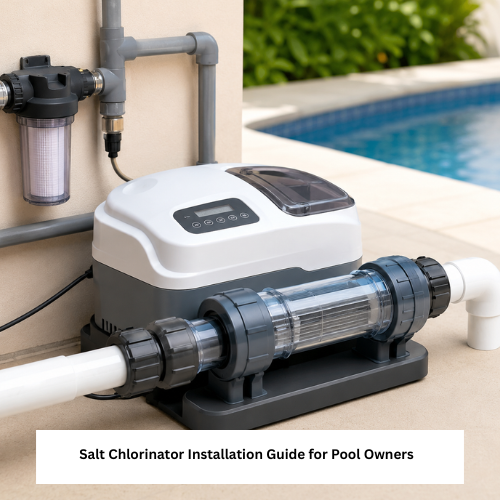
A salt chlorinator installation should be plan carefully because the system must match your pool plumbing, electrical setup, water chemistry, salt level, and salt cell placement. Beginners should review the manual, check compatibility, and avoid guessing with plumbing or wiring.
This guide explains basic chlorinator setup, salt generator setup, pool salt installation, salt cell setup, and saltwater pool setup checks. It is written for pool owners, spa owners, hot tub owners, and buyers comparing saltwater chlorination systems.
Salt Chlorinator Installation Basics
Salt chlorinator installation usually involves installing a control unit, connecting the salt cell in the correct plumbing location, confirming water flow, adding the right amount of pool salt, and setting the system output.
The exact process depends on the product and pool setup. If wiring, plumbing, flow direction, pipe size, salt range, or installation parts are unclear, verify before buying and follow the manufacturer’s manual.
Chlorinator Setup Planning
A safe chlorinator setup starts before the box is open. Check whether the system is made for your pool type, gallon size, pipe layout, pump, filter, heater, and automation setup.
The salt cell usually needs proper flow and enough space for service access. Do not install it where it is hard to inspect, remove, or clean later.
| Setup Step | What to Check | Why It Matters | Verify Before Buying |
| System size | Pool gallon rating | Helps maintain sanitizer output | Pool volume and system rating |
| Plumbing location | Pipe size and flow direction | Supports proper salt cell operation | Unions, fittings, and pipe space |
| Electrical setup | Voltage and wiring needs | Important for safety | Manual and local electrical rules |
| Salt level | Recommended operating range | Helps avoid low-salt or high-salt errors | Test kit and product manual |
| Cell access | Cleaning and removal space | Makes maintenance easier | Installation clearance |
| Startup settings | Output level and pump runtime | Affects chlorine production | Control panel instructions |
Pool Salt Installation and Water Balance
Pool salt installation should never be based on guessing. Test the current salt level first because some pools may already contain dissolved salt from past chemical use.
Add salt only according to the product manual and pool volume. Let it dissolve fully before expecting the chlorinator to work normally. Do not pour salt directly into the skimmer unless the manual specifically says it is safe.
Salt Cell Setup and Placement
Salt cell setup is important because the cell installed in the correct direction and location. Many systems require the cell to be placed after the filter and heater, but the exact requirement depends on the product.
Check arrows, unions, flow switch position, cable length, pipe clearance, and service space. If the cell orientation or plumbing layout is unclear, verify before installation.
You can review how to replace the salt cell in your pool if you want to understand salt cell access and future service planning before choosing a system.
Saltwater Pool Setup Startup Tips
A saltwater pool setup may require balancing water before turning on the system. Check salt level, stabilizer, pH, alkalinity, calcium hardness, and chlorine level based on the manual.
Run the pump long enough for salt to mix fully. Test water again before raising output. If warning lights appear, read the manual instead of immediately replacing parts.
Tools, Parts, and Compatibility Checks
Some installations may need unions, pipe fittings, sealant, flow switch parts, mounting hardware, and electrical connections. Do not assume every kit includes everything needed for your pool.
Buyers can check generator kits when comparing salt chlorination system packages and included components.
You can also compare a saltwater chlorinator kit example to understand common kit-style product layouts before ordering.
Safety Guidance for Installation
Turn off power before working near pool equipment. Water and electricity create serious safety risks, so qualified support may be needed for electrical work.
Wear eye protection when cutting or handling PVC. Make sure plumbing glue, fittings, and cure time are used according to product directions. Do not start the system until installation is complete and safe.
Common Installation Mistakes
One common mistake is adding too much salt before testing the current level. Another is placing the salt cell where it cannot be removed for cleaning.
Do not ignore flow direction. A backward cell or incorrect flow switch location can cause errors. Do not guess on wiring, voltage, or breaker requirements.
Troubleshooting After Installation
If the system shows a low-salt warning, test the water before adding more salt. Low water temperature, poor circulation, dirty cell plates, or sensor issues may also affect readings.
If chlorine stays low, check pump runtime, output setting, stabilizer level, cell condition, and water balance. If flow warnings appear, check filter pressure, valves, pump operation, and flow switch placement.
Practical Buying Checklist
- Confirm pool size and system capacity.
- Check pipe size, unions, and plumbing space.
- Verify electrical requirements before buying.
- Review salt level range and startup instructions.
- Check salt cell placement and service access.
- Confirm flow switch and cable compatibility.
- Check included parts, fittings, and mounting hardware.
- Review safety warnings and local installation rules.
- Check warranty, return policy, delivery, and support.
- Confirm replacement cells and parts are available.
- Verify before buying if setup details are unclear.
Conclusion
Salt chlorinator installation works best when the system fits the pool, plumbing, power setup, salt level, and maintenance plan. Measure carefully, verify compatibility, follow the manual, and get qualified help for plumbing or electrical steps when needed.
FAQ
Can beginners install a salt chlorinator?
Some basic setups may be manageable, but plumbing or electrical work may require a qualified professional. Always follow the manual.
Where the salt cell should be installed?
The salt cell is usually installed in the return line, but exact placement depends on the product and pool setup.
Should I test salt level before adding salt?
Yes. Always test the current salt level before adding more salt to avoid over-salting the pool.
What causes low chlorine after installation?
Low output, short pump runtime, low stabilizer, dirty salt cell, incorrect salt level, or water imbalance can cause low chlorine.
What should I verify before installation?
Verify pool size, pipe size, voltage, flow direction, included parts, salt range, warranty, and replacement cell availability.
