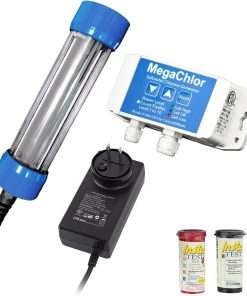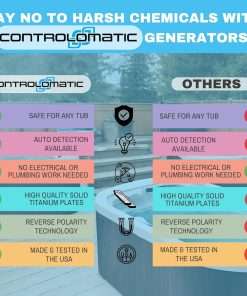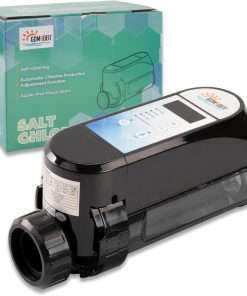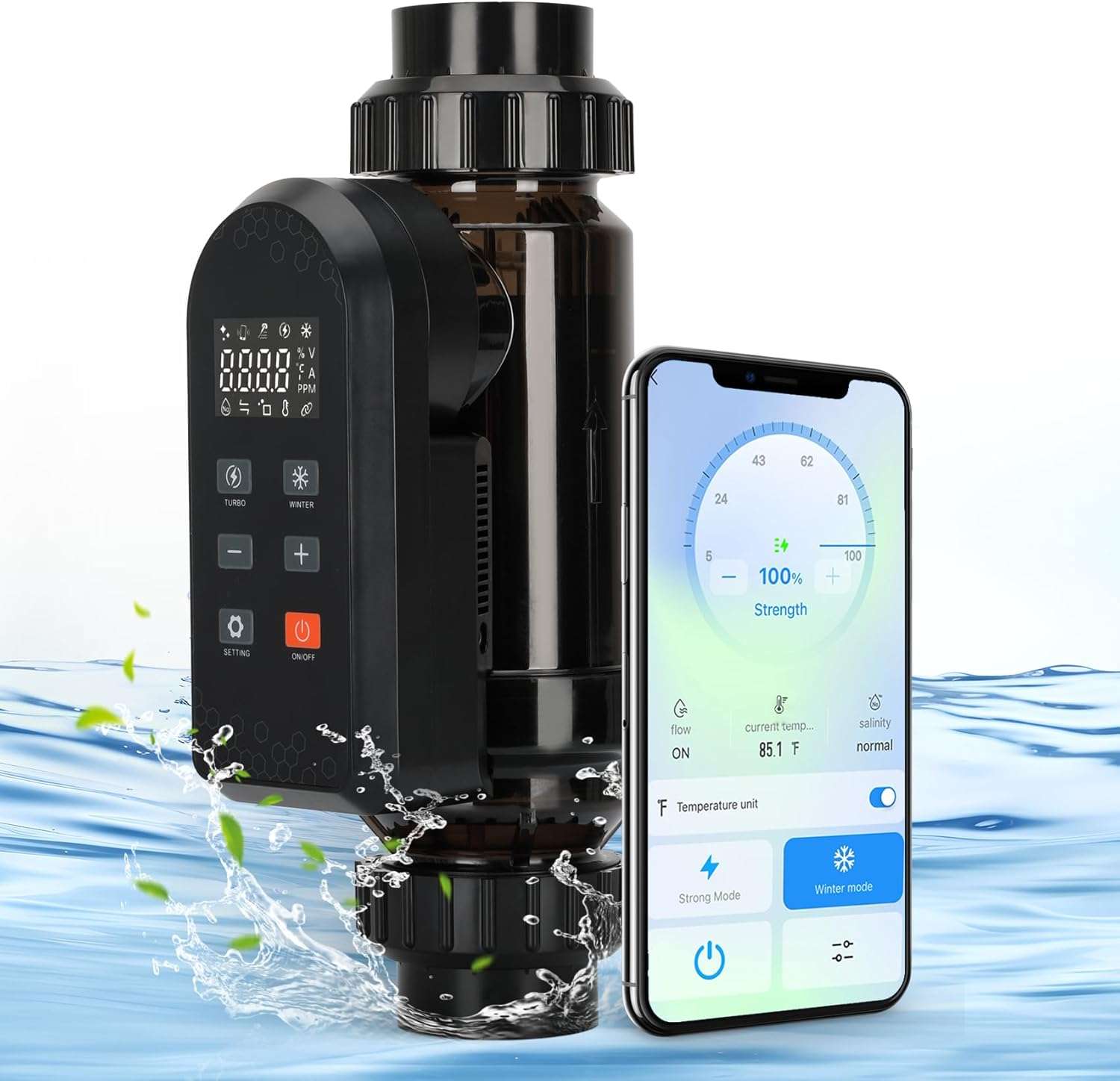
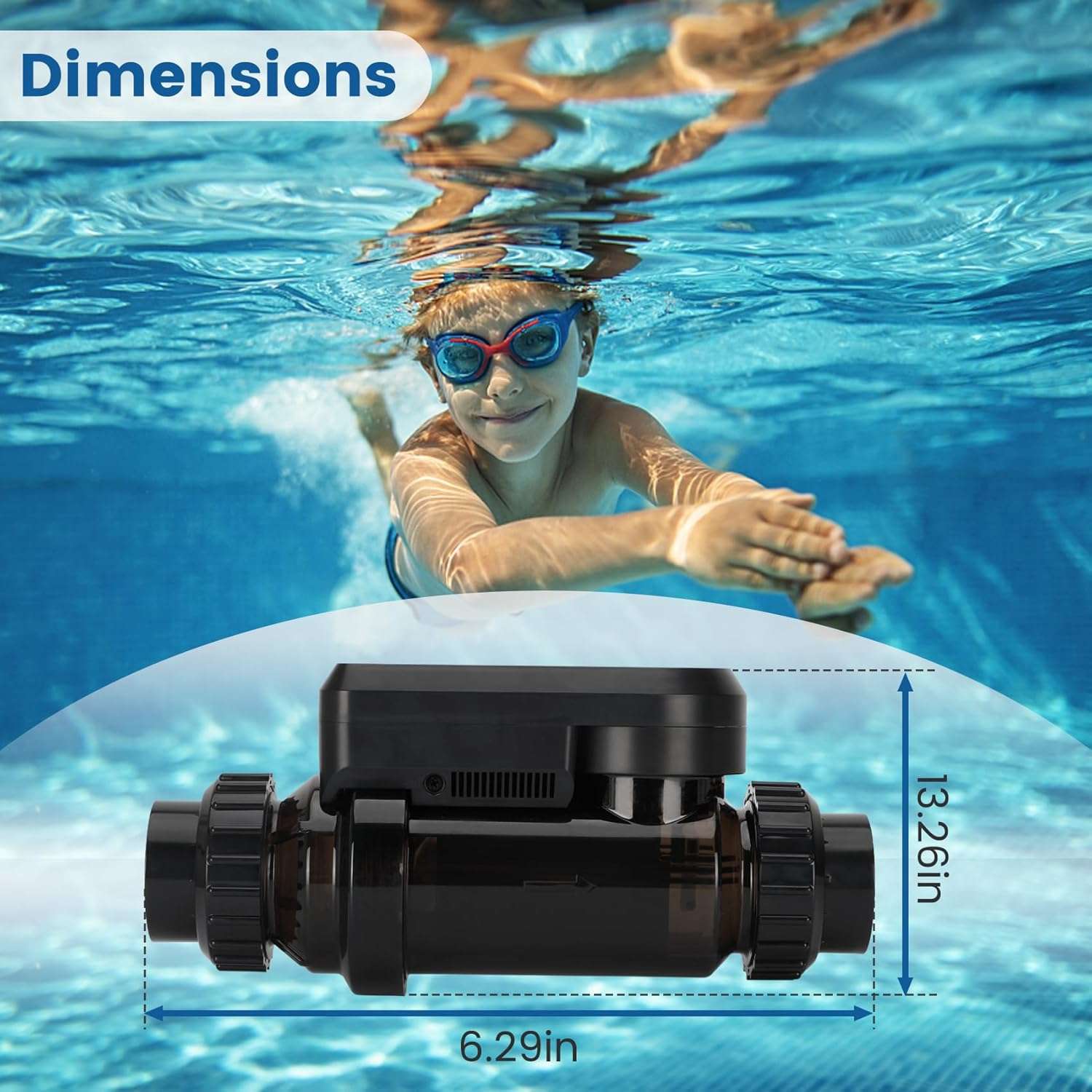
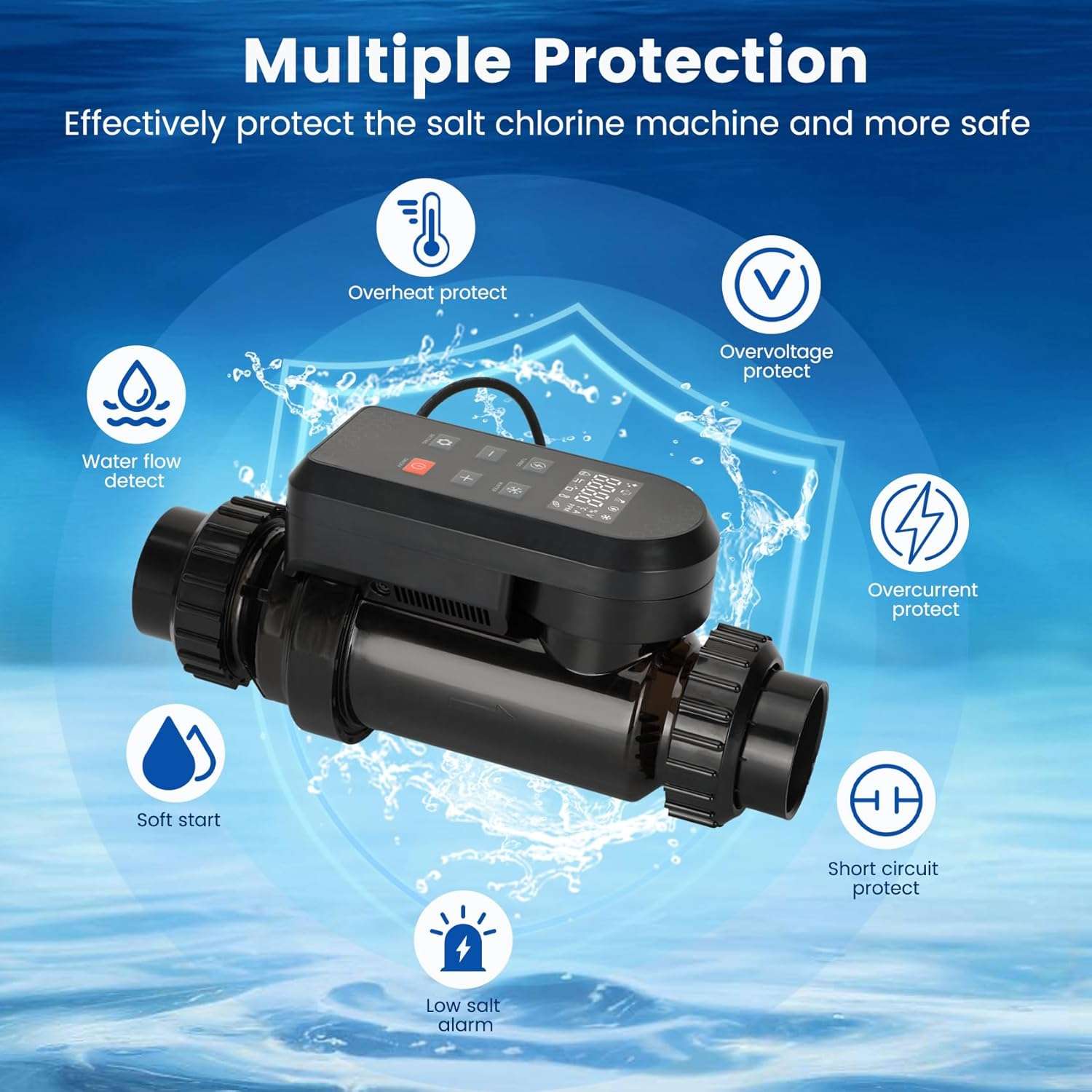


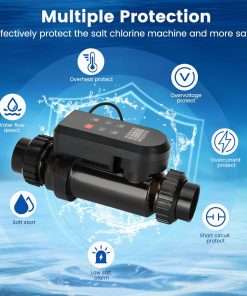
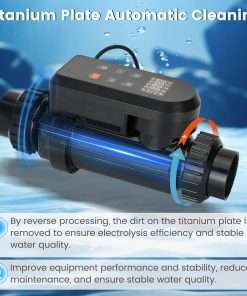
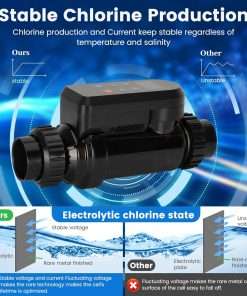

Product Details
- Brand: Fengind
- Product type: salt water chlorination system / salt chlorinator
- Pool size listed: up to 25,000 gallons
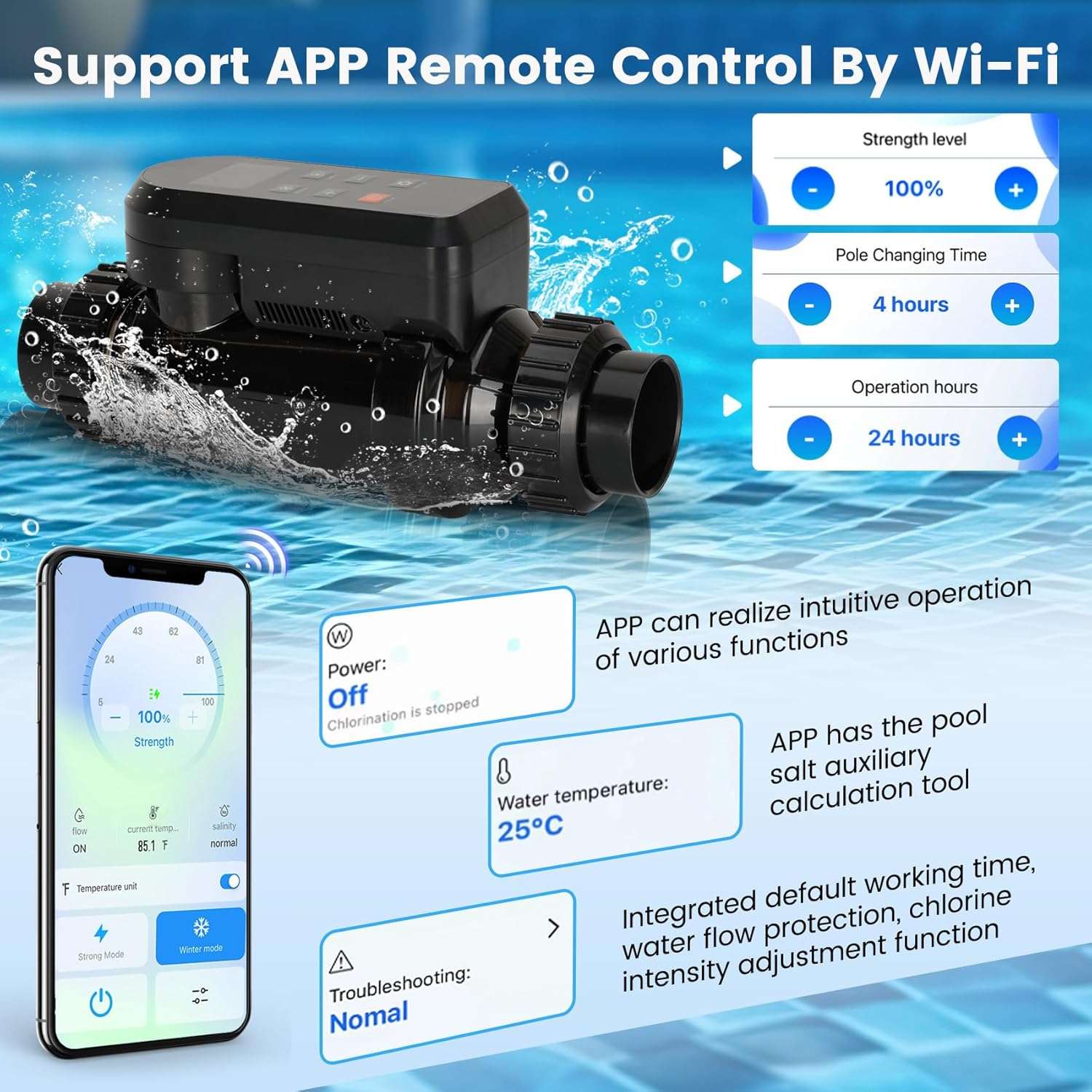
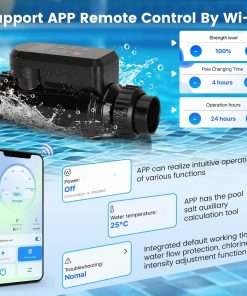
- Controls: built-in Wi-Fi, app remote control, and digital panel
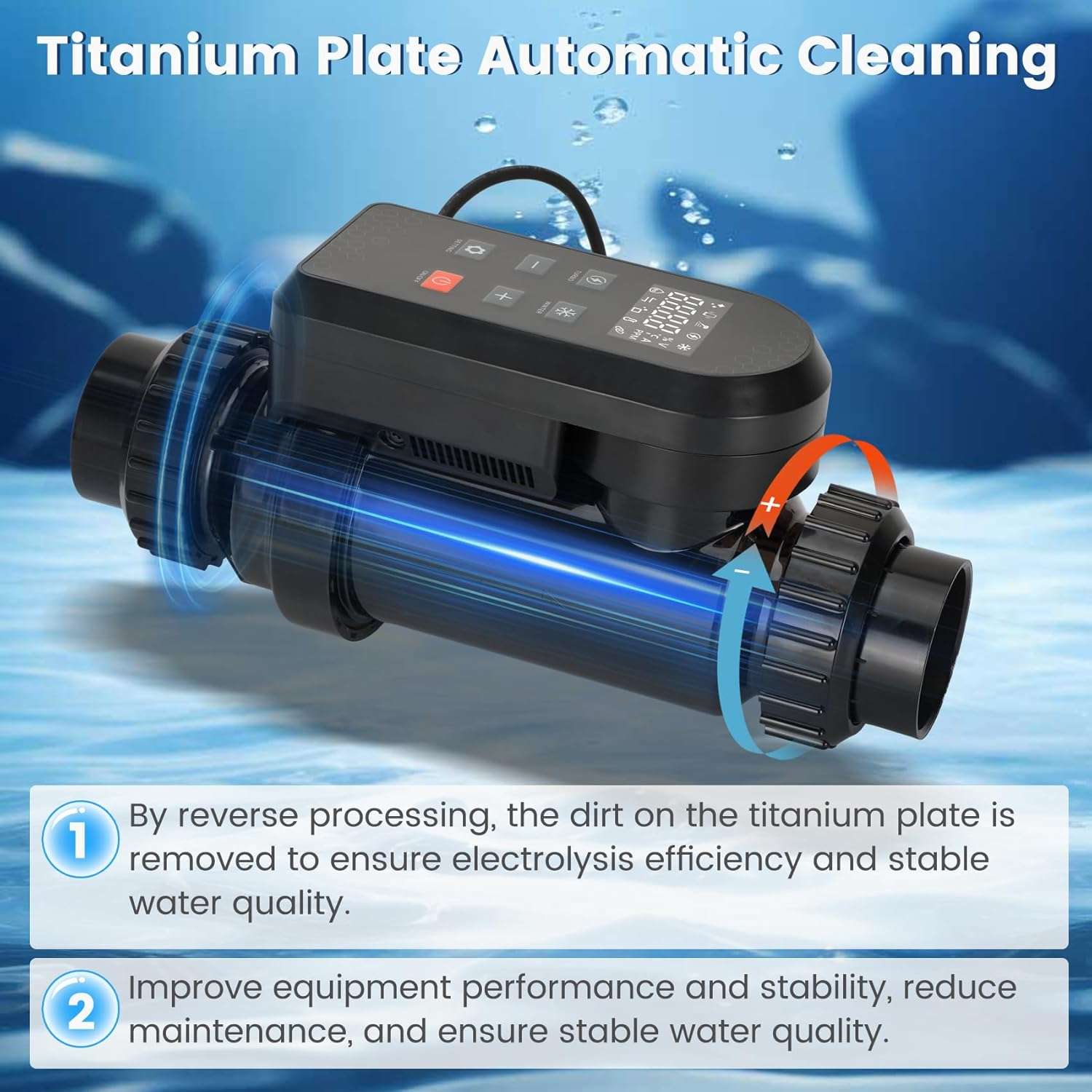
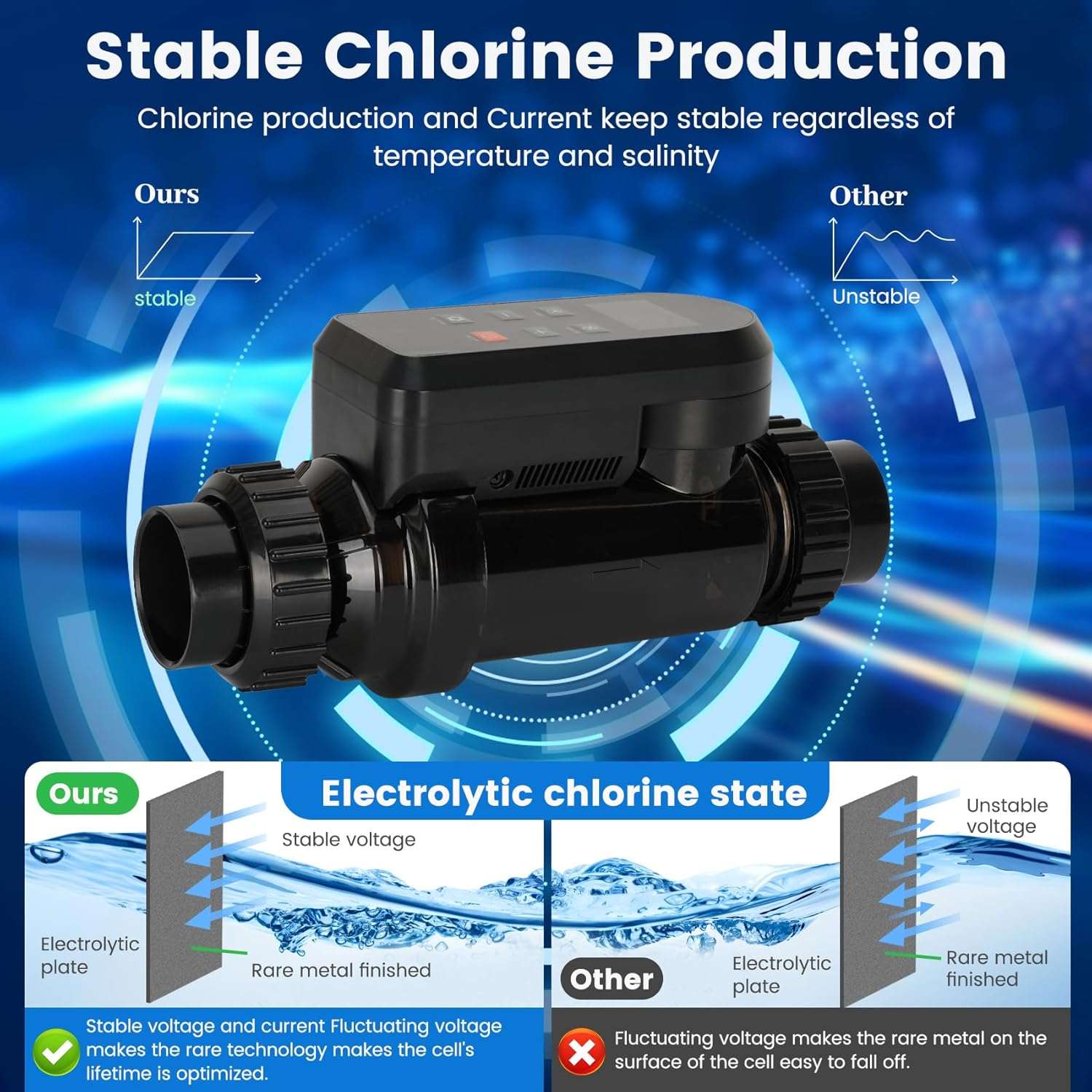
- Cell type: self-cleaning titanium plates
- Alert feature: low salt reminder and operation status display
- Water resistance: IPX5 listed waterproof rating
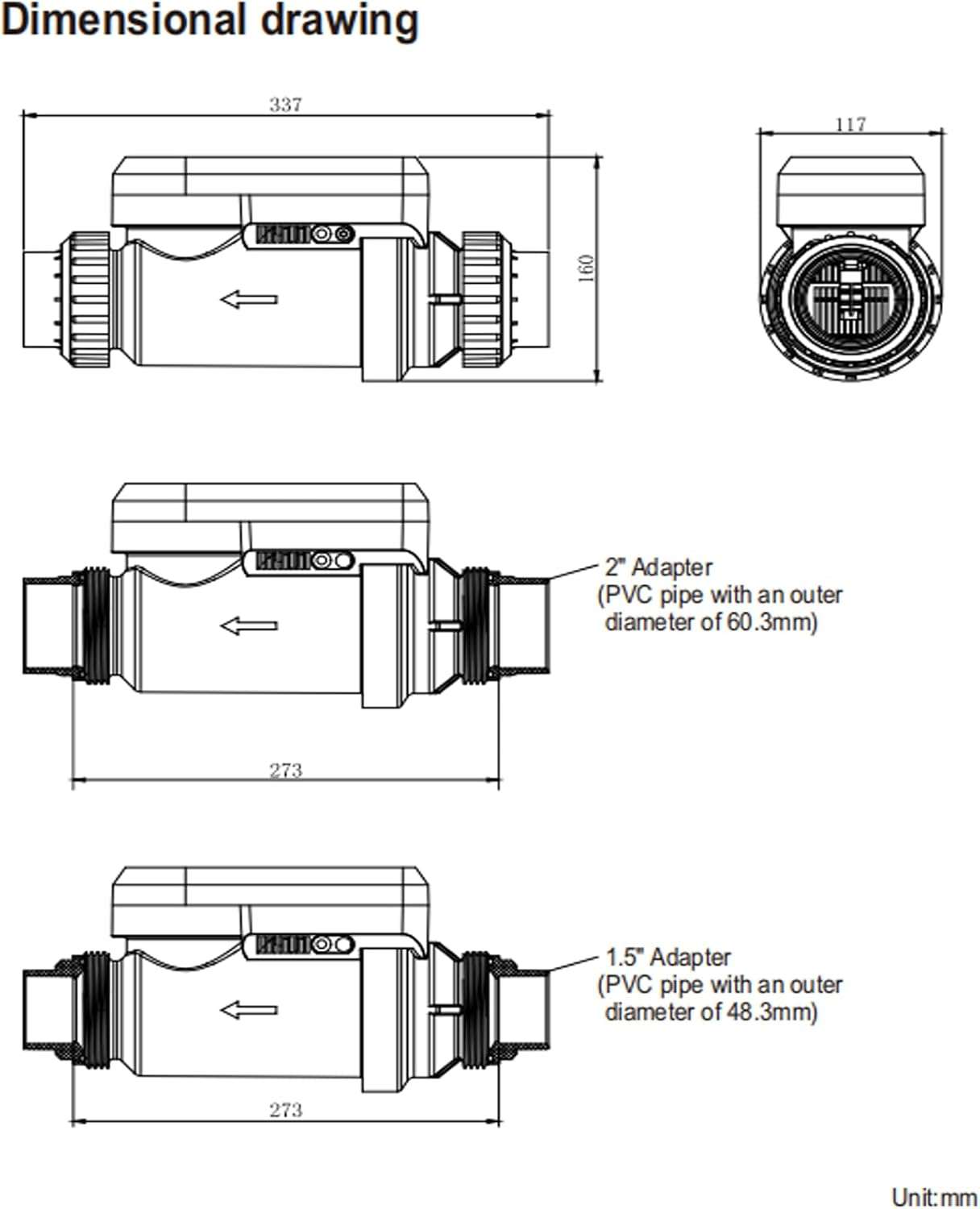
- Listed product dimensions: 9.5 x 9 x 5.9 inches
- Listed item weight: 6.45 pounds
- Listed model number: 20
- Best use: swimming pools where pipe size, power supply, flow direction, and installation space match the unit requirements
Pool Compatibility and Fit
Before ordering, check your pool volume, plumbing size, pump flow, and available installation space. A salt chlorinator must be matched to the pool size so it can produce enough chlorine during normal pump run time.
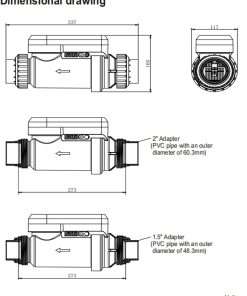
This model is shown with adapter options for pool plumbing, but the exact pipe fitting size should be verified before installation. Buyers with smaller pools may also want to compare a salt cell up to 15000 gallons if they do not need a larger-capacity system.
Installation and App Setup
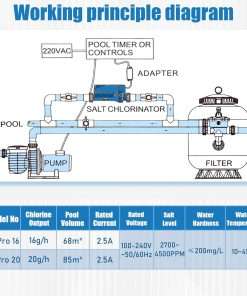
Install the system according to the user manual and make sure the unit is placed in the correct direction of water flow. It should typically be installed after the filter and heater, where clean water can pass through the salt cell before returning to the pool.
Basic setup usually includes:
- Turning off pool equipment before installation
- Connecting the chlorinator to the return line using the correct fittings
- Checking all seals and unions before restarting the pump
- Connecting the unit to Wi-Fi if app control is being used
- Downloading the required app and pairing the device
- Setting chlorine output, run time, and cleaning preferences based on pool size and water test results
If app operation is important, compare this model with a chlorine generator app control option and confirm that the app works with your phone, Wi-Fi band, and location before publishing the final product listing.
Salt Level, Operation, and Maintenance
This chlorination system uses dissolved pool salt to generate chlorine. It does not remove the need for water testing. Pool owners should still test and balance salt level, free chlorine, pH, alkalinity, stabilizer, and calcium hardness as part of regular pool care.
The low-salt alert helps remind users when salt may need attention, but water should still be checked with a reliable test strip or test kit. Self-cleaning titanium plates can help reduce scale buildup, but the cell should still be inspected and cleaned according to the manual.
For users who want more control over run time and daily chlorine output, a saltwater chlorinator timer may be useful to compare with this system’s built-in scheduling and app-control features.
What Buyers Should Check Before Ordering
This salt water chlorination system may be a good fit if you want automated chlorine production, app-based control, and a digital panel in one unit. It is especially important to confirm the following details before buying:
- Pool gallon capacity
- Above-ground or in-ground pool compatibility
- Pipe size and adapter fit
- Voltage and plug type
- Wi-Fi and app compatibility
- Salt level requirement
- Flow direction and installation position
- Replacement cell availability
- Warranty, return policy, and support details
If you are comparing similar pool sanitizing equipment, review a salt water chlorine generator option as well so you can choose the correct size, control style, and installation type for your pool.
Important Use Notes
This system still produces chlorine, so proper water balance is required for safe and comfortable swimming. Do not run the unit without proper water flow, and do not submerge the control panel or electrical parts. The IPX5 rating helps with water exposure, but it should not be treated as protection against underwater use.
For best results, follow the manual for installation, startup salt level, cell cleaning, winter storage, and app pairing. If the pool has heavy use, hot weather, rain, algae, or low stabilizer, chlorine demand may increase and settings may need adjustment.