


Salt Chlorine Generators
AquaCal Autopilot DN1 Digital Nano 115-volt Salt Chlorine Generator for Pools, 22000-Gallon

Salt Chlorine Generators
AquaCal Autopilot DN2 Digital Nano 220-volt Salt Chlorine Generator for Pools, 22000-Gallon

Salt Chlorine Generators
AquaCal Autopilot DNP1 Digital Nano Plus 115-volt Salt Chlorine Generator, 28000-Gallon

Salt Chlorine Generators
AquaCal Autopilot DNP2 Digital Nano Plus 220-volt Salt Chlorine Generator, 28000-Gallon


Salt Chlorine Generators
AquaChek 561140A Salt Water Swimming Pool Test Strips – White


Salt Chlorine Generators
Aquachek 561161 Swimming Pool White Salt Titrators Test Kit Strips, 40 Count


Salt Chlorine Generators
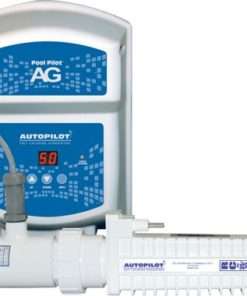
Autopilot DIG-42 Pool Pilot Digital Salt Chlorine Generator, DIG220_94107_APK0004


Salt Chlorine Generators
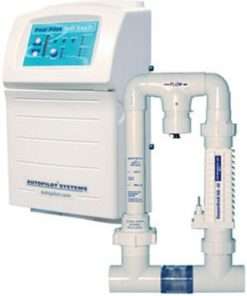
AutoPilot DN1 Salt Chlorine Generator – Pool Pilot Digital NANO 115V System


Replacement Kit
Salt Chlorine Generators


Detail Description
How many ppm should a salt water pool be?
A salt water pool should have a ppm of around 3500. This is because the higher the ppm, the more chlorine will be produced and the more effective it will be at killing bacteria. However, too high a ppm can be dangerous for humans and can cause skin irritation.
Is 3800 ppm salt too high?
The short answer to this question is that, yes, 3800 ppm salt is too high. This is because the ideal range for salt concentration in a freshwater aquarium is between 1000-3000 ppm. Anything above 3000 ppm starts to put stress on fish and other aquatic life, and at 3800 ppm, the fish will likely start dying. In addition, high levels of salt can also lead to problems with the filter and other equipment in the aquarium. For these reasons, it is best to keep the salt level in your aquarium at 3000 ppm or below.
Is 4000 ppm salt too high?
The short answer is no, 4000 parts per million (ppm) of salt is not too high. In fact, it is a relatively common concentration for saltwater aquariums. That said, there are some things to keep in mind when maintaining a saltwater aquarium with this level of salinity.For one, you will need to make sure that the water you are using to top off the tank is also at 4000 ppm. This can be accomplished by using distilled or RO/DI water, or by mixing your own saltwater ahead of time and storing it in a container. If you use tap water, you will need to test it first to make sure that the levels are consistent.Secondly, you will need to be aware of the potential for evaporation. When water evaporates, the salt concentration increases. As such, you may need to add more water to the tank on a regular basis to maintain the correct level. A good rule of thumb is to add about 10-20% of the total volume of the tank each week.Finally, it is important to remember that all creatures in the aquarium – fish, invertebrates, and even algae – can be sensitive to changes in salinity. As such, it is best to make gradual changes rather than sudden ones. For example, if you are raising the salinity from 3000 ppm to 4000 ppm, you would want to do so over the course of several days or weeks rather than all
How much salt to raise 1000 ppm?
It is difficult to say how much salt would be required to raise the level of salinity in a body of water to 1000 parts per million (ppm). This is because the amount of salt required would depend on a number of factors, including the size of the body of water, the current level of salinity, and the desired final level of salinity.In general, however, it is estimated that raising the salinity of a body of water from 0 ppm to 1000 ppm would require adding approximately 35 grams (just over 1 ounce) of salt per cubic meter (1000 liters) of water. So, for example, if you were trying to raise the salinity of an Olympic-sized swimming pool (containing 2.5 million liters of water), you would need to add around 87.5 kilograms (193 pounds)